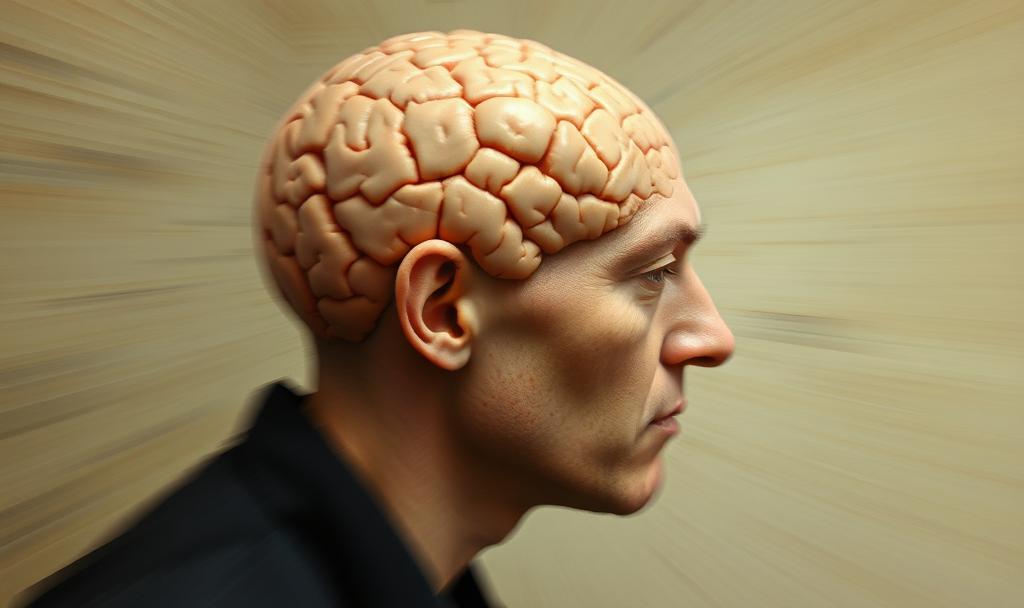
🕰️ The Victorians and Their Love Affair With Head Bumps
“If you’ve ever thought your head’s shape explains your personality… congratulations: you’d have been a hit at Victorian dinner parties.”
The rise and fall of phrenology
In the early 1800s, the British upper classes developed a curious obsession: the art (or nonsense, depending on who you ask) of phrenology. This “science” involved feeling the bumps and dips on people’s skulls to assess traits like intelligence, morality, and propensity for mischief.
It was like LinkedIn endorsements — but done with calipers, in parlours, by gentlemen with moustaches you could hang your coat on.
What they believed
According to phrenologists:
A bump above your left ear? Clearly, you were destined for great compassion.
A dip near the crown? Sorry, old chap — loyalty’s not your thing.
They published detailed charts mapping these “organs” of character. Want to know if your suitor would make a good husband? Just measure his skull. (Romance, 1830s style.)
The public loved it
Phrenology boomed. It was popular at fairs, salons, and even among reformers. It promised insight, self-improvement, and just enough pseudo-science to feel respectable.
Naturally, it was also used to justify all sorts of prejudices and hierarchies. (Never trust a system that says your moral worth lives in a skull bump.)
The modern equivalent

Fast forward to today. No one’s feeling heads at parties (I hope). But we do:
Buy £200 brainwave headbands to prove we’re “calm”
Download apps to measure our “focus score”
Post our “meditation streak” online for clout
Phrenology died. The instinct behind it? Very much alive.
🛠️ Actually Useful: Box Breathing (The British Way to Calm Down)
“For when you’re too polite to scream but too stressed to stay silent.”

What it is
Box breathing is about slowing down your breath and telling your nervous system that, no, you’re not being chased by a wolf (or the taxman).
Simple steps: 1️⃣ Inhale for 4 2️⃣ Hold for 4 3️⃣ Exhale for 4 4️⃣ Hold for 4
Repeat 4 times.
Why it works
Calms the amygdala: That bit of your brain that triggers the fight-or-flight response.
Activates the parasympathetic system: The part that says, “It’s fine, mate, we’re safe.”
Interrupts spiralling thoughts: Because it’s hard to panic and count at the same time.
Where to use it
Before a meeting
After reading the news
When the self-help guru you follow posts their latest £500 course
Pro tip
Do it quietly. You don’t want colleagues thinking you’re hyperventilating at your inbox (even if you are).
🎯 The Old Grey Challenge: Outsmart Your Inner Critic
“Today’s task: When your brain tells you you’re rubbish, answer it with British aplomb.”
What’s happening

We all have that inner voice. You know the one. The voice that:
Pipes up mid-task: “You’re terrible at this.”
Interrupts your peace: “You’ll never finish.”
Pops up at 3AM: “Everything is doomed.”
The science bit
That voice? It’s just neurons firing along old pathways. The brain loves familiarity — even when it’s unhelpful.
The good news: with practice, you can build new routes.
Your challenge this week
Every time that voice chimes in, calmly say: 👉 “That’ll do, brain. That’ll do.”
Don’t argue. Don’t engage. Just… move on. (Extra points if you say it aloud and confuse your cat.)
Why it works
Breaks the cycle of rumination
Adds distance between thought and identity
Builds new, healthier response patterns
Bonus variation
Add a grin. Confuse the brain. It won’t know what’s going on — and that’s good.
🤡 Grey Matter Gadget Watch: The £89 Focus Spoon

“Because your teaspoon clearly isn’t mindful enough.”
Yes, this week’s find: a real product — a weighted spoon “designed to anchor your attention during stressful moments.”
Marketing promises: ✅ More presence ✅ Calmer mind ✅ A stylish addition to your desk
What you actually need: ✅ A real spoon ✅ A cup of tea ✅ Box breathing
Save your money
Focus spoons, meditation headbands, crystal water bottles… Your brain just needs you to:
Breathe
Move
Pay attention (without props)
Parting quip
If a spoon could really fix your focus, I’d be the Dalai Lama by now.
📢 This Week’s Shameless Plug
👉 Want more wit + science? Read my latest Medium post: “Your Brain: A Brief History of Bad Ideas (and a Few That Work)”