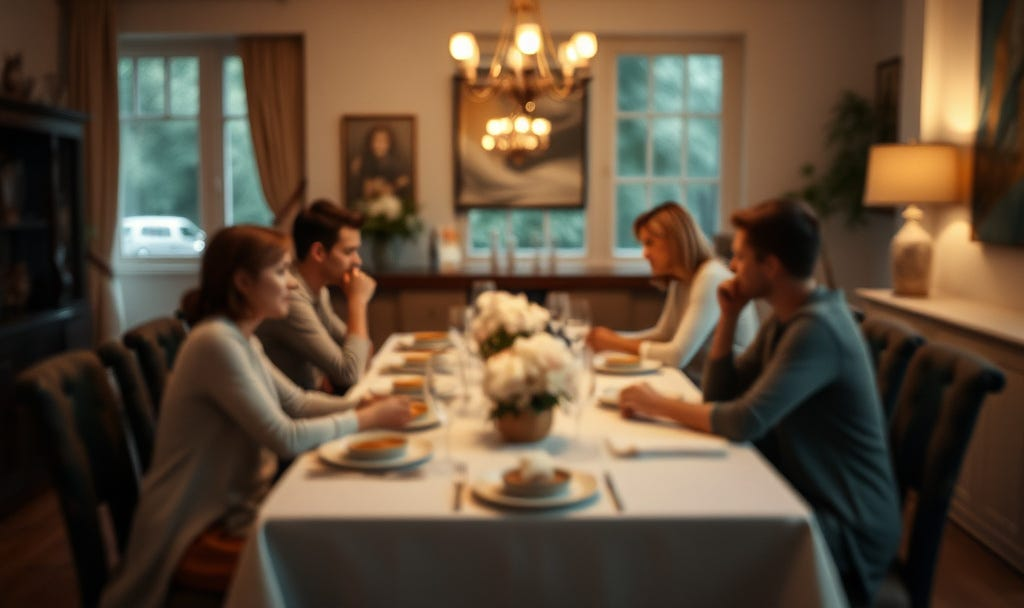
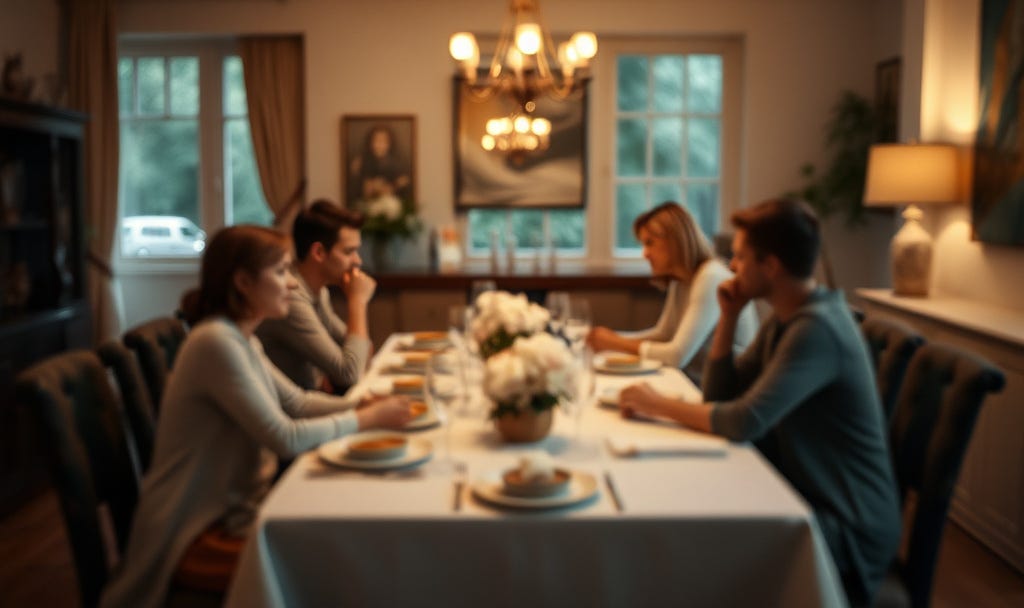
It happens, usually, on a perfectly ordinary day.
Not at a big crisis.
Not during a dramatic argument.
On a Sunday lunch, or a birthday, or a quick cup of tea when everyone’s “dropping in” before shooting off again.
You’re sitting there, listening to your grown‑up children talk about their lives, their jobs, their kids.
You feel proud.
You feel grateful.
And then, quietly, you feel something else:
“They don’t actually know me.”
Not the way you know them.
Not in the deep‑in‑your‑bones way you’ve carried their stories for decades.
The asymmetry nobody talks about
From the day they arrive, you study your children like a sea chart.
You learn:
their moods
their fears
their odd little habits
You remember:
the teacher who knocked their confidence
the friend who broke their heart
the ridiculous Spider‑Man phase
Your mental filing cabinet is crammed with their details.
They, meanwhile, know you as:
Mum or Dad
the person who sorted things out
the backdrop to their story
They rarely saw you:
in full panic
in full joy
as anything other than “the grown‑up”
Why would they?
Your job was to make sure their boat stayed afloat, not invite them to watch you bailing water out of yours.
The trouble is, if you never update that arrangement, you can arrive in later life with adult children who love you dearly…
…but only really know the role you played, not the person who played it.
The moment it hit me
For me, the realisation landed at a birthday dinner.
The conversation drifted onto retirement.
One of my lot said, cheerfully:
“You’ll enjoy it, Mum/Dad. You’ve never been very ambitious. You’re easy‑going. You’ll just potter and read and walk the dog.”
There was nothing malicious in it.
They meant it kindly.
But the sentence clanged in my head like a dropped pan.
Easy‑going.
Never ambitious.
Pottering.
I thought of the years I’d spent white‑knuckling bills, the nights I lay awake worrying about their exams, the sheer graft it took to keep everything more or less upright.
I thought of the dreams I’d shelved, quietly, because there was no spare money, no spare time, no spare energy.
How had they missed all that?
Simple: because I hid it.
On purpose.
To protect them.
And in doing so, I accidentally taught them a neat, incomplete story about who I was.
The parent mask that never came off
Most of us put on a kind of mask when we have children.
The one who copes.
The one who knows.
The one who says, “Everything will be alright” whether or not we believe it.
When they’re small, that mask is a kindness.
They need solid ground.
They don’t need to know how close the bank account is to the cliff, or how scared you were before that operation, or how much you sometimes wanted to get in the car and keep driving.
But if you never, ever let the mask slip – even a little, even when they’re grown – you end up living behind your own myth.
They get used to “fine” as your default setting.
They stop asking deeper questions because they assume there’s nothing under the surface.
You may even get praise for it:
“You’re so strong.”
“You never complain.”
“You’re easy.”
And then, in your sixties, seventies, you look up and realise there are whole rooms of your life your children have never stepped into.
Not because they’re selfish.
Because the door always looked locked.
My Medium friends can read this over there as well.
The risk of letting them see you properly
So what do you do with that ache – the sense of being loved, but not really known?
Before you continue, a gentle note: paid subscribers get access to all of my private guides, behind-the-scenes AI methods, and step-by-step ways to turn your knowledge into income in a calm, grounded, sustainable way.
If subscribing isn’t right for you at the moment, you can always support my work by buying me a pot of tea.
I appreciate every kindness — truly.
⬇️ Keep reading for the deeper story — and the shift that changed everything.small kindness hit you harder than it should — this is the part you shouldn’t miss.