You never really listen until the shouting starts.
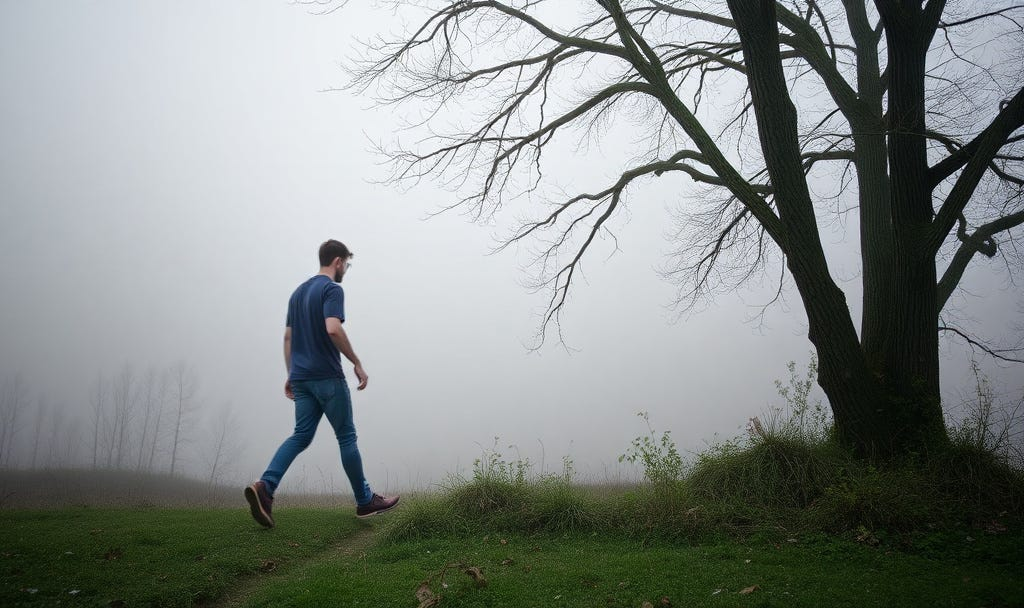
It was a Tuesday morning in late November. Outside, a thin mist had settled over the garden, blurring the edges of the shed I’d been meaning to repaint since 2019. My hands were wrapped around a mug of tea that had gone cold while I stared out of the window, trying to ignore the persistent ache that had taken up residence between my shoulder blades.
The thing about bodies is they’re constantly talking to us. Mine had been clearing its throat for decades before I finally bothered to pay attention. The odd twinge after gardening. The knee that forecasted rain more accurately than the Met Office. The subtle shift in what foods I could eat without regret the following morning.
We were the generation raised on “mind over matter” and “stiff upper lip.” Our parents survived rationing and rebuilding after the war – what right did we have to complain about a bit of stiffness? We grew up watching our fathers work through illnesses, our mothers cook Sunday dinner with migraines, and we inherited their stoicism like an heirloom pocket watch: somewhat outdated but too precious to discard.
Meanwhile, the world around us had become obsessed with bodies – just not aging ones. Instagram is filled with twenty-somethings twisting themselves into yoga poses named after animals I’ve never seen. Wellness became a £4 billion industry in the UK alone, but somehow its messaging rarely seems aimed at people whose joints make Rice Krispies sounds when they stand up from an armchair.
There’s something quietly insulting about being simultaneously invisible and patronized. “Senior fitness” classes where they assume you can’t lift more than a tin of beans. Medical professionals who attribute every symptom to “getting older” before you’ve finished describing what’s wrong. The relentless cheerfulness of pamphlets about “aging gracefully” that never acknowledge the grief that comes with watching your capabilities change.
I should admit I’ve been stubborn about the whole thing. When my wife suggested I try swimming for my back pain, I spent six months finding reasons why the local pool’s schedule didn’t work with mine. Pride has a way of costing more than the price of admission to a new way of thinking.
The research actually backs this up. A study from King’s College London found that people over 55 who engaged in body awareness practices reported 38% better pain management and significantly improved quality of life compared to those who didn’t. It’s not just feel-good nonsense – it’s practical health management.
I remember the morning it finally clicked. I was struggling to put on socks, contorting myself into positions that would have made a contortionist wince, when I caught my reflection in the bedroom mirror. There I was, a 63-year-old man fighting with a pair of M&S cotton blends like they were an adversary, and suddenly it seemed absurdly funny. What was I proving by ignoring what my body had been politely trying to tell me for years?
That my knees work differently now than they did at 40 isn’t a personal failure or a reason for shame. It’s just information – useful information that could help me navigate the next twenty years with more ease if I’d stop being so bloody stubborn about acknowledging it.
The most profound relationships in our lives require listening. We’d never expect a marriage to thrive if we ignored everything our partner said for decades. Yet somehow we treat these bodies – the only homes we’ll ever truly inhabit – as inconveniences when they communicate their needs.
So I started paying attention. Not in the obsessive way that turns every twinge into a WebMD diagnosis of impending doom, but with the same practical assessment I’d once used to evaluate weather conditions before setting sail. Just facts, patterns, and adjustments.
I noticed my energy peaked in the mornings, that three glasses of wine left me foggy for two days instead of one, that twenty minutes of stretching made the difference between a good day and a grim one. Simple data points that allowed for simple solutions.
There’s a certain dignity in this approach. Not the manufactured dignity of pretending nothing has changed, but the authentic dignity of adapting with intelligence and self-respect.
⬇️ A gentle invitation
Before you continue, a gentle note: paid subscribers get access to all of my private guides, behind-the-scenes AI methods, and step-by-step ways to turn your knowledge into income in a calm, grounded, sustainable way.
They’re designed for people who’ve spent years accumulating wisdom and want to turn that experience into something meaningful, useful, or quietly profitable — without the noise, pressure, or hustle the rest of the internet pushes.
You might find something in there that opens a door you didn’t realise was locked.
If subscribing isn’t right for you at the moment, you can always support my work by buying me a pot of tea.
I appreciate every kindness — truly.