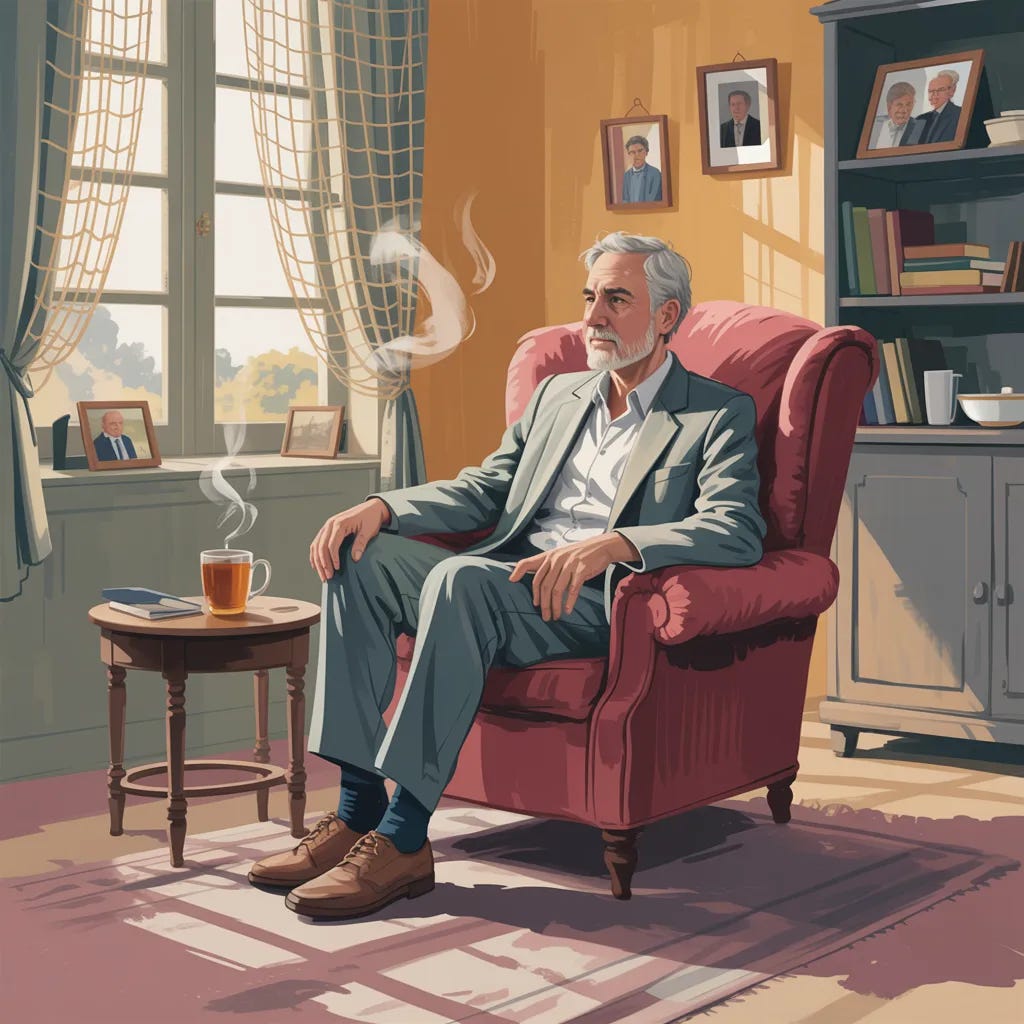
For most of my working life, silence meant something had gone wrong.
On the bridge of a ship, silence is the thing you notice when the engines stop, or the radio goes dead, or a crew member who should be talking isn’t. It has weight. It has implication. You don’t sit with it — you investigate it, you resolve it, you restore the noise that means everything is functioning as it should.
I retired, and the silence arrived, and I did what I’d always done. I tried to fix it.
I filled it with projects. With routines. With the low-level busyness that retired people develop the way other people develop hobbies — not because it brings particular joy but because the alternative is sitting with something uncomfortable. I was very productive for about eight months. I achieved very little of any lasting significance. I was, I now realise, running from a room I hadn’t yet had the nerve to enter.
The room was quiet. The room was where all the things I’d been too busy to think about were waiting.
At 67, I’ve come to a reluctant conclusion about silence. It isn’t the reward at the end of a working life. It isn’t the peace they put in the brochure. It is, if you let it, a fairly rigorous examination — of what you actually value, what you actually believe, what you actually want from whatever time remains.
Most people, given the choice, would rather not sit the exam.
Read the full and origional Article at The Old Grey Thinker