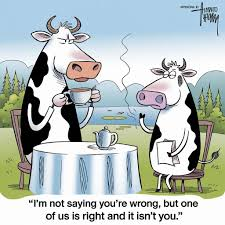
I turned sixty and suddenly felt like I’d been enrolled, without consent, into a cultural obstacle course.
I grew up in a world where “Dear Sir or Madam” was considered radically inclusive. Now I find myself cross-referencing footnotes just to send a thank-you email. Somewhere along the way, the language changed, and nobody sent a memo.
And yet—I try. Oh, how I try.
Take last week. I complimented a younger colleague on her presentation, adding that it was “refreshingly articulate.” Cue a look of such weary disappointment you’d think I’d drop-kicked a puppy. Turns out, calling someone articulate, especially if they’re not white, is loaded with implications I hadn’t clocked. I apologised. She was gracious. I still haven’t forgiven myself.
Then there was the time I introduced an old friend as “my mate who used to be Margaret.” He laughed, thank God. “I’m still Margaret to HMRC,” he said, “but these days I answer to Max.” We toasted to paperwork and moved on.
I tell these stories not to revel in my mistakes, but to say: this stuff is hard. Not because we’re stubborn or cruel, but because language is a living, twitching beast. And by the time we’ve learned one of its new dances, it’s pirouetted off in a different direction, muttering something about microaggressions and gender fluidity.
Of course, the temptation is to disengage entirely. To fold our arms and harrumph, “You can’t say anything anymore,” as if censorship has personally mugged us in a car park.
But that’s lazy thinking. Worse—it’s cowardice disguised as principle.
Because the truth is: the world is changing, and that’s what the world does. Our job isn’t to memorise a glossary of the right words. It’s to keep listening. Keep noticing. Stay open, even if it occasionally makes us look like confused meerkats at a Pride parade.
And yes, sometimes we will get it wrong. We’ll use a word that’s outdated, or forget someone’s pronouns, or think “neurodivergent” is a type of Scandinavian wallpaper. But if the intention is kind, and the apology sincere, most people will forgive us. Many will even laugh with us. That’s the kind of world I want to live in.
So no, I don’t always get it right. But I’d rather be clumsily inclusive than elegantly indifferent. Better to be the slightly embarrassing uncle who’s trying than the crusty relic who isn’t.
Besides, if we’re not occasionally mortified, are we even growing?
Have you had a well-meaning stumble lately? Share your story — or just reassure me I’m not the only one wandering the maze of modern manners without a map.