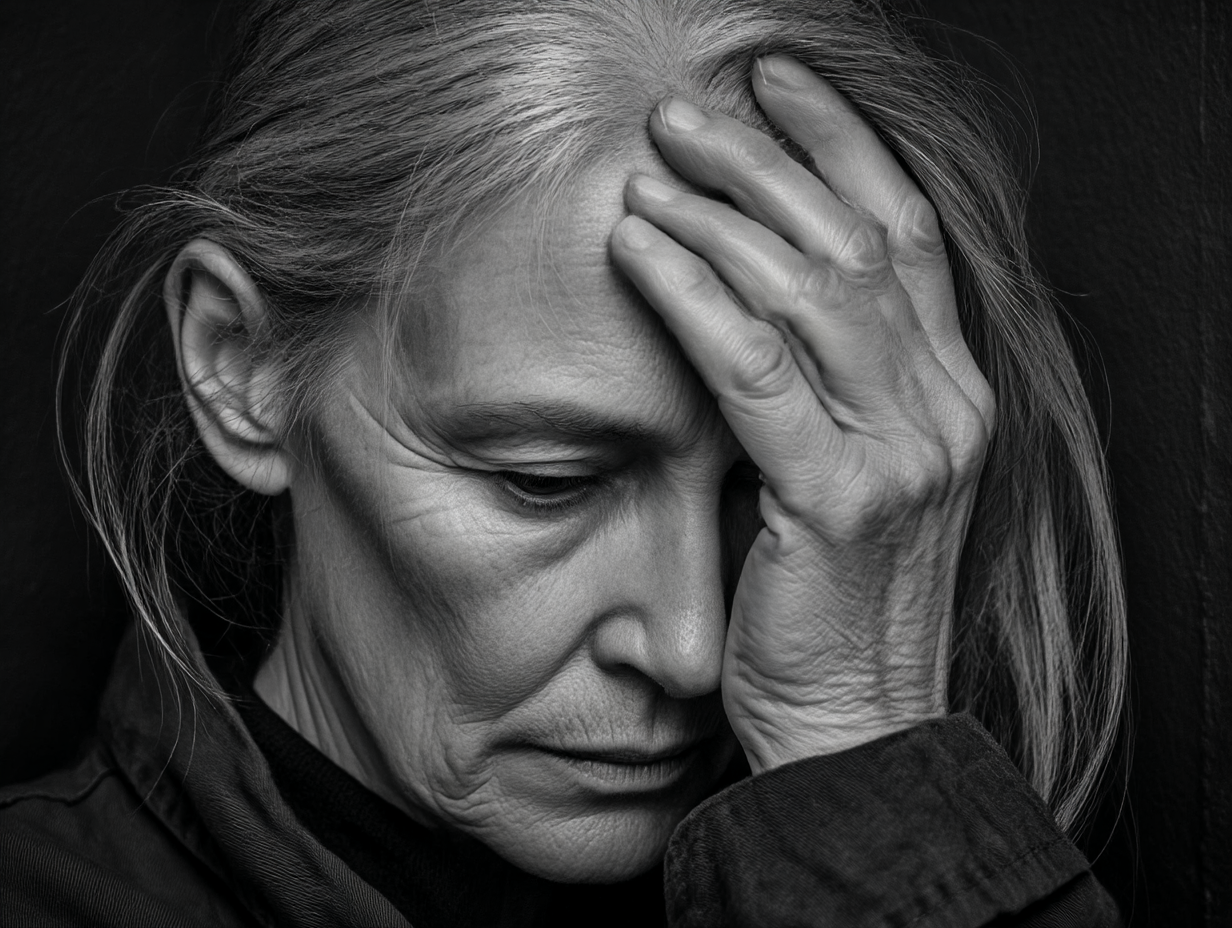
In every family, there’s always one person who holds it all together. The rock. The one who never falls apart. The reliable one who everyone else calls when their own worlds are crumbling.
I found myself sitting in the Tesco car park last Tuesday, engine off, rain drumming on the roof. I’d just finished a phone call with my sister about Dad’s deteriorating memory, followed immediately by a text from my daughter about her marriage troubles, and an email reminder about my grandson’s school appeal that needed my “help with the wording.” My hands gripped the steering wheel though I wasn’t going anywhere. I just needed five minutes of nobody needing anything from me.
Our generation was raised on self-sufficiency. We’re the children of people who survived rationing and remembered the war. “Pull yourself together” wasn’t just advice, it was a family motto. We learned early that showing weakness was self-indulgent, and being strong for others was the highest form of love.
Now here we are in our 60s, and somehow, we’ve inherited an unwritten contract. Our parents need looking after as they face the final chapters. Our adult children are struggling with broken housing markets and unstable jobs. The grandchildren need backup childcare because nursery costs as much as a mortgage. And through it all, we’re expected to be the emotional headquarters for the entire operation.
The trouble is, nobody recognizes emotional labour as actual work. There’s no wage for it. No time off. No performance review where someone says, “You’ve been shouldering too much; we’re promoting you to a position where you can just worry about yourself for a change.”
I realized last month, after a particularly gruelling week of family crises, that I’d been operating like an unpaid therapist. I’d spent 22 hours on the phone listening, consoling, advising, and absorbing distress—while simultaneously hiding my own exhaustion because “they’ve got enough on their plates.”
This is the bit where I have to admit something uncomfortable. Part of me enjoys being needed. There’s a certain identity security in being the strong one, the fixer, the emotional headquarters. When everyone treats you as indestructible, you can almost believe it yourself. And that’s a dangerous place to be.
A recent study from Age UK found that 72% of people in their 60s and 70s provide significant regular emotional support to at least one family member, with women spending an average of 9 hours per week actively managing other people’s emotional states. If paid at therapy rates, that’s about £500 of free emotional labour every month.
Something broke in me last Thursday. My son rang, mid-crisis as usual, and I heard myself saying: “I can’t be your emotional support today. I’m running on empty.” There was a strange silence, followed by genuine concern—not for his problems, but for me. It was the first time in decades I’d admitted I wasn’t coping, and the sky didn’t fall.
We’ve spent our entire lives being the buffer generation. We looked after our parents while raising our children. We managed careers while handling family logistics. We learned to accommodate everyone else’s needs while treating our own as optional extras. And somewhere along the way, we forgot that emotional resources aren’t infinite.
The rain had stopped by the time I finally started the car. I’d made a decision sitting there, watching shoppers push their trolleys through puddles. I would write down my emotional labour boundaries and share them with my family. Office hours for crisis calls. Days off from being the family counsellor. Permission to say “I don’t have the capacity for this today” without explanation or apology.
It’s not about loving them less. It’s about finally understanding that being broken and human in front of the people who have only ever seen your strength might be the most important gift you can give them. Not just for your sanity, but for theirs—so they don’t inherit this impossible standard of always being the one who holds it together at any personal cost.
Yesterday, I had that conversation with my daughter. I told her I was exhausted from being everyone’s emotional rock. That sometimes, I need to be held instead of doing the holding. Her response floored me: “I’ve been worried about you for years, dad but I didn’t know how to help because you never let anyone see when you’re struggling.”
Perhaps the bravest thing we can do in our 60s is to finally put down the emotional load we’ve been carrying since we were children ourselves. To say, clearly and without guilt, “This is too heavy for one person to carry alone.”
⬇️ A gentle invitation
Before you continue, a gentle note: paid subscribers get access to all of my private guides, behind-the-scenes AI methods, and step-by-step ways to turn your knowledge into income in a calm, grounded, sustainable way.
They’re designed for people who’ve spent years accumulating wisdom and want to turn that experience into something meaningful, useful, or quietly profitable — without the noise, pressure, or hustle the rest of the internet pushes.
You might find something in there that opens a door you didn’t realise was locked.
If subscribing isn’t right for you at the moment, you can always support my work by buying me a pot of tea.
I appreciate every kindness — truly.