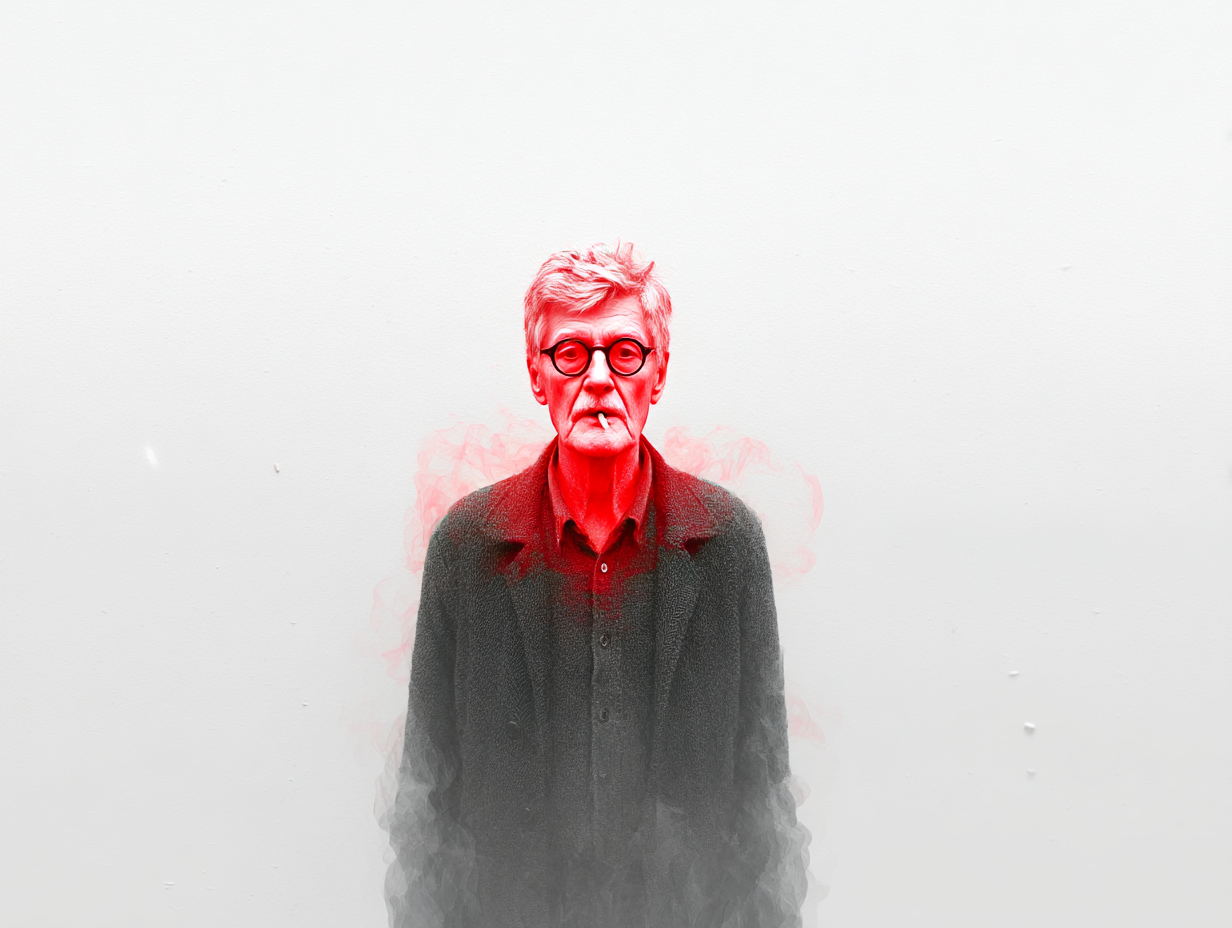
There’s a particular kind of prison you build yourself. Not with bricks or iron bars, but with all the things you’ve never said aloud.
It’s Tuesday afternoon and I’m sitting in my conservatory with a mug of tea gone cold. Rain patters against the glass roof in that familiar December rhythm. I’ve pulled out an old shoebox of photographs – faces from forty years back, work colleagues from the merchant navy days, staring out with expressions that hint at stories I never really knew.
We were sold this idea that life moves in a clean arc. School, career, family, retirement, a few gentle years of golf and grandchildren. The brochures never showed the messy middle bits, or the way you reach your sixties still feeling like you’re waiting for the proper adult to arrive and take over. Nobody mentioned you’d be carrying around five decades of unsaid things.
The generation before us – our parents – they perfected the art of the dignified silence. Keep calm, carry on, take your secrets to the grave. We absorbed that lesson early. Don’t rock the boat. Don’t make a scene. Swallow whatever needs to be said and get on with it.
But I’ve started to wonder if that silence wasn’t strength at all. Maybe it was just fear dressed up as stoicism.
I’m as guilty as anyone. There are conversations I should have had with my father that now live permanently in the realm of too late. Things I never told my children during those tender years when they might have actually listened. Truths about myself I’ve rearranged into more comfortable shapes.
The data suggests I’m not alone in this. A study from King’s College found that people over 65 report carrying an average of seven significant “undiscussed life events” – things they’ve never fully processed or shared. Seven invisible weights, gathering moss as the years pass.
What would happen if we finally spoke them?
Not in some dramatic deathbed confession scene from the films, but quietly, deliberately, while we still have time to see what grows in the spaces where secrets used to live.
I had a mate from the Glasgow route – Campbell, we called him Soupy – who at 72 finally told his adult children he’d never wanted to be a ship’s engineer at all.
His dream had been to teach history. He’d spent fifty years in engine rooms because his father had pulled strings to get him the position when jobs were scarce. His daughter later told me it was like meeting her father for the first time. “I always sensed there was a shadow version of him,” she said, “just out of reach.”
The courage it takes isn’t the loud, obvious kind they give medals for. It’s the quiet sort that feels like standing naked in a cold room.
Terrifying in the moment, but then – just maybe – followed by a curious warmth.
I started small. Told my brother I’d always been jealous of how easily he made friends. Admitted to my oldest son that I’d been scared rather than brave during those first months of his life. Wrote a letter to an old colleague apologizing for taking credit for an idea that had been his all along.
Each truth felt like removing a small stone from a rucksack I’d forgotten I was carrying.
There’s something particularly British about our relationship with honesty.
We’ve elevated understatement to an art form.
We’re brilliant at talking around things, masters of the meaningful silence. “I’m fine” means anything but. We’d rather die than cause a fuss, quite literally in some cases.
But I’m starting to think this isn’t serving us well in our later years. The price of all those unspoken words becomes steeper with time. They calcify into regrets, hardening around the heart like plaque in arteries.
The clock ticks differently after sixty.
You become acutely aware that the runway is shorter than the journey already traveled. The luxury of “I’ll say it someday” starts to feel dangerously like self-deception.
Yesterday I sat across from my wife of forty-one years at our kitchen table. Steam rose from fresh tea as the winter sun cut low through the window. I told her things I should have said decades ago – about fears I’d hidden, moments I’d felt lost, gratitudes I’d swallowed instead of expressed.
Not in some grand speech, just in simple, unvarnished sentences.
She looked at me for a long moment, then nodded slowly. “I know,” she said. “I’ve always known.” Then she told me her own truths, and we sat there as the light faded, finally seeing each other completely.
There’s no dramatic transformation in this story. No sudden perfect understanding or Hollywood resolution. Just the quiet relief of putting down something heavy I’d carried too long.
Perhaps that’s all late-life courage really is.
Not some bold reinvention or dramatic stand.
Just the simple, belated decision to stop pretending. To look at the stories you’ve been telling yourself and others, and gently correct the record while there’s still time.
The rain has stopped now.
The conservatory glass shows patches of clear evening sky between retreating clouds.
I’m putting the photographs back in their box, but differently this time.
Not hidden away, but organized, labeled, ready to be shared along with the truths they’ve silently held all these years.
It turns out the prison door was never locked.
It just needed a gentle push from the inside.
⬇️ A gentle invitation
Before you continue, a gentle note: paid subscribers get access to all of my private guides, behind-the-scenes AI methods, and step-by-step ways to turn your knowledge into income in a calm, grounded, sustainable way.
They’re designed for people who’ve spent years accumulating wisdom and want to turn that experience into something meaningful, useful, or quietly profitable — without the noise, pressure, or hustle the rest of the internet pushes.
You might find something in there that opens a door you didn’t realise was locked.
If subscribing isn’t right for you at the moment, you can always support my work by buying me a pot of tea.
I appreciate every kindness — truly.