and god did I miss it….
I locked my smartphone in my desk drawer a few days ago.
Not permanently—just an experiment. After fifty-two years of progressively more sophisticated interruption machines, I wanted to see what happened in the silence.
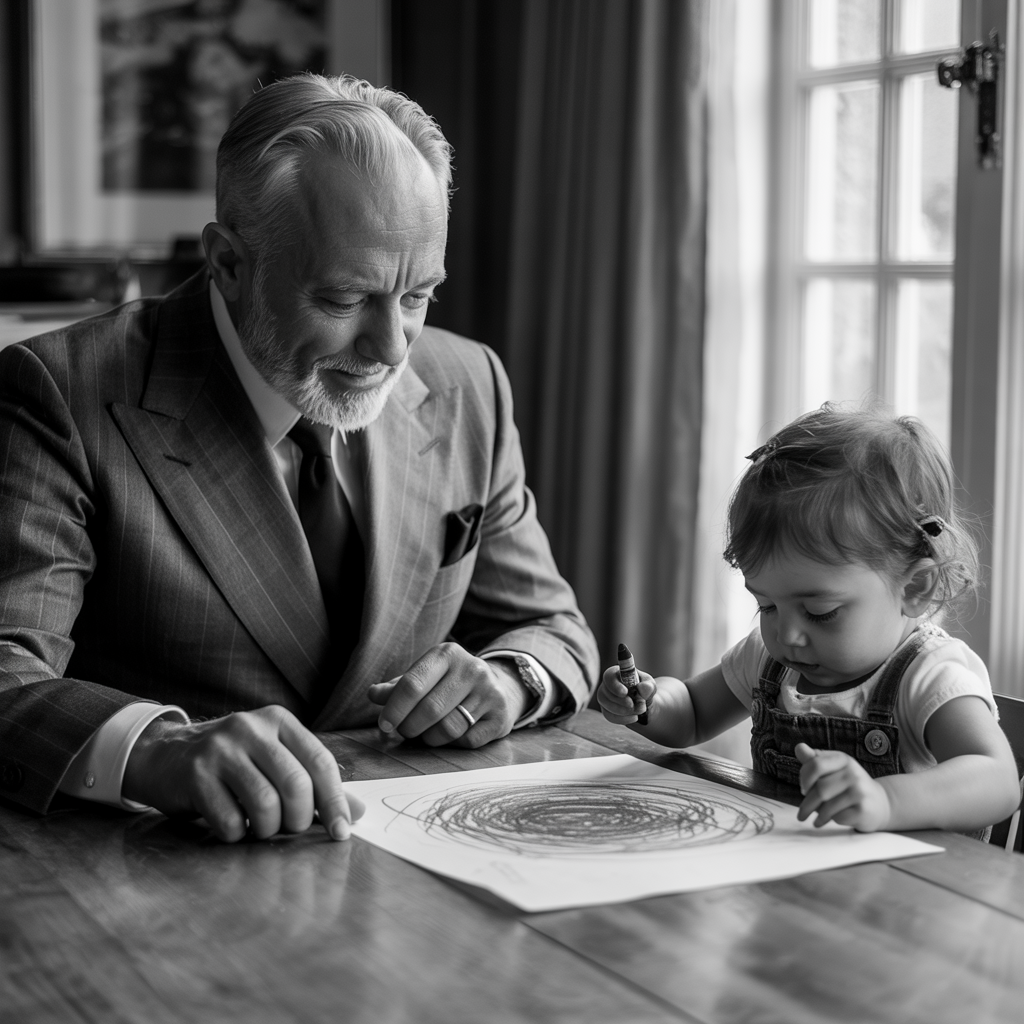
The catalyst was watching my four-year-old granddaughter drawing at the kitchen table.
She worked for nearly an hour, completely absorbed, while I checked my phone seventeen times.
I counted. Seventeen glances at a screen while sitting across from a small human creating something wonderful.
“What are you looking for?” she eventually asked, without looking up from her masterpiece.
I had no answer that didn’t sound pathetic.
The truth was, I wasn’t looking for anything in particular.
My phone had trained me too well—I’d become a laboratory pigeon, conditioned to peck at the notification bar in hopes of receiving a digital food pellet.
So into the drawer it went. Four days, I decided. Thursday through Sunday.
The first six hours were predictably awful. I reached for the phantom device dozens of times. My palm felt naked. I experienced genuine anxiety about missed messages, though I’d warned everyone who might need me. By evening, however, something shifted.
I found myself standing at the kitchen window for fifteen uninterrupted minutes, watching a blackbird methodically collect twigs for its nest. Not photographing it. Not Googling “common blackbird nesting habits.” Just watching.
The second day brought deeper changes. Without my digital crutch, I rediscovered reading as a primary activity rather than something done between notifications. I finished a novel I’d been pecking at for weeks, then immediately started another. The pages turned without competition.
The most revealing moment came on Saturday morning at the café where I’ve been a regular for years.
The barista—a young woman named Claire who has serves me Yorkshire tea ( to her absolute disgust) three times weekly since I retired—looked genuinely startled when I initiated conversation instead of staring at my screen while waiting.
“You’re very chatty today,” she said.
“Am I normally not?” I asked.
She paused, measuring her words. “Well, you’re pleasant enough, but you’re usually… elsewhere.”
Four months of brief, pleasant, utterly forgettable interactions while my attention was divided. How many other half-connections had I maintained this way? How many conversations never deepened because I was perpetually available to people who weren’t in the room?
By Sunday evening, when I reluctantly retrieved my phone, I’d noticed other changes. My sleep had improved dramatically. My thoughts felt more linear, less fragmented. I’d had actual, spontaneous ideas while walking—the kind that used to come regularly before I carried the internet in my pocket.
I’m not suggesting we all become digital hermits.
These marvellous devices have given us capabilities our younger selves could only dream of. I can video call and watch my granddaughter grow up 100 miles away. I can carry a library in my pocket and navigate unfamiliar cities with confidence.
But there’s wisdom in occasional disconnection. Perhaps we might consider:
Designating certain rooms as phone-free zones (the bedroom being an obvious candidate)
Creating “airplane mode weekends” once a month
Leaving the phone at home during particular walks or errands
Switching to an actual alarm clock rather than sleeping beside our digital Swiss Army knife
What I’ve realised is that my relationship with technology should be precisely that—a relationship, with boundaries, expectations, and occasional time apart.
Not an addiction, not a tether, and certainly not a replacement for the slow, quiet moments where life actually happens.
As my grandmother used to say when we visited and complained there was nothing to do: “Only boring people get bored, dear.”
Perhaps we’ve forgotten how to sit with ourselves, how to let our minds wander without digital training wheels.
The drawer experiment continues, though modified.
My phone now sleeps outside the bedroom and stays locked away for one full day each weekend.
Small changes, but the silence they create feels increasingly valuable—a luxury that costs nothing but pays richly.
If you enjoyed this, check out The Old Grey Tool Kit
P.S I continue writing and creating …….latest guide here