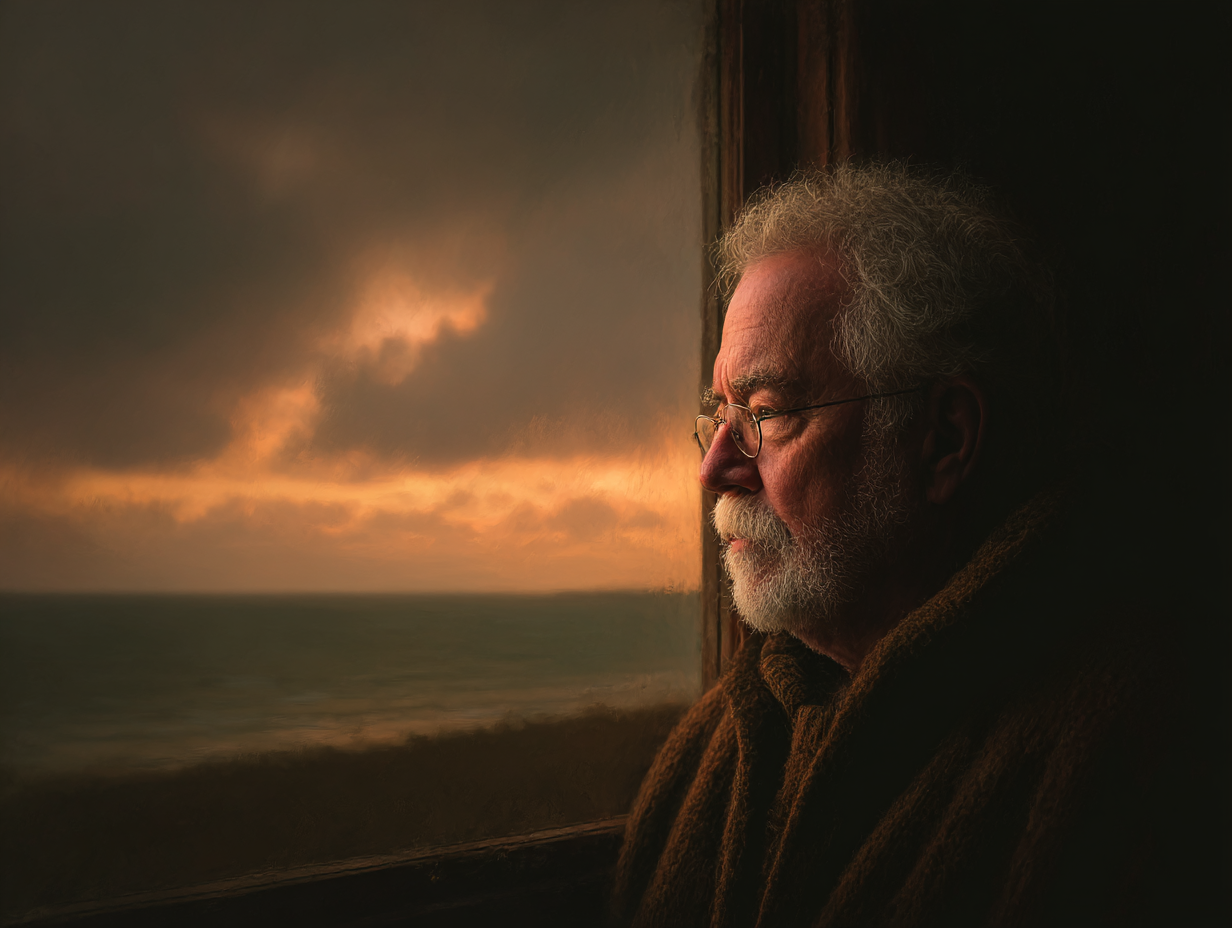
There’s a strange kind of silence that arrives at the end of a year. Not the festive kind, not the family kind, but the quiet that slips in after the noise is over. A silence that seems designed for one purpose only: to make you look at yourself. I didn’t plan to do any grand reflection this December. I’m not one for new-year reinventions or dramatic promises. But a few days ago, for reasons I still can’t fully explain, I found myself staring at my own face in the bathroom mirror and asking the most ridiculous question of my life: “Am I dumb?”
It wasn’t said in anger, and it wasn’t a joke. It was a genuine moment of confusion. I’d misplaced something again—my keys, or my glasses, or the thought I’d been holding only seconds earlier—and the frustration rose in me with a familiarity I didn’t want to admit. I used to command crews, coordinate storms, and make life-changing decisions before breakfast. I used to be sharp, fast, certain. And for a moment, standing there in the late-afternoon light, I wondered where that man had gone.
Age is supposed to bring clarity, or at least that’s the myth we’re sold. But this year didn’t feel clear. It felt slippery. New technology made me feel slow. Conversations moved faster than my mouth. The world kept inventing fresh ways to make men my age feel like relics. Even simple tasks took more time than I wanted to give. And underneath all of it was a quiet fear, one I hadn’t admitted until that moment in the mirror: not that I was getting older, but that I was getting… dull.
That question—am I dumb?—felt childish and brutal at the same time. But the longer I stood there, the more I realised it wasn’t really a question about intelligence at all. It was a question about identity. For decades, my competence was a kind of armour. I knew who I was because I knew what I could do. When you spend a lifetime being relied upon, you start to believe that usefulness and worth are the same thing. Retirement didn’t just hand me more time; it took away the places where my intelligence mattered. It left me standing in a world where nobody needed a captain, and without that anchor, I drifted.
It took nearly an entire year for me to see that I hadn’t lost my mind. I’d simply lost the context that used to sharpen it.
When you’re learning something new at 67—whether it’s a new routine, a new identity, or simply a new version of yourself—it feels uncannily similar to being stupid. You hesitate. You second-guess. You forget. You feel behind. But that doesn’t mean your intelligence has vanished. It means you’ve stepped into territory you were never trained for. And if I’m honest, this has been the first year of my life where I’ve had to admit I’m a beginner again.
That admission, strangely, didn’t defeat me. It freed me.
Because the truth is, being a beginner at my age isn’t a sign of decline. It’s a sign of courage. I spent decades knowing exactly who I was. Now I’m discovering who I am without all the scaffolding. And yes, it’s uncomfortable. Yes, it’s humbling. Yes, I forget where I’ve put my glasses. But I’m also noticing things I never saw before. The slowness of mornings. The honesty of my own thoughts when nobody’s watching. The way a small moment—a question in a mirror—can change the direction of an entire year.
I’ve come to understand that intelligence isn’t measured by speed or memory or performance. It’s measured by awareness. And this year has forced me into a deeper awareness of myself than any job ever did. I’ve asked harder questions. I’ve let myself admit fears I used to bury under work. I’ve stopped pretending that I have to be the smartest or the quickest or the most capable. That man served me well, but he’s earned his rest. The one emerging now—slower, softer, more deliberate—might actually be wiser.
So no, I’m not dumb. I’m simply becoming someone new. And becoming someone new requires exactly what I’ve avoided for most of my life: patience.
If the younger version of me walked into my house today, he’d probably shake his head at the man I’ve become.
He’d see the mislaid keys, the half-finished books, the moments of uncertainty, and think I’d slipped.
But what he wouldn’t understand is that the sharpness he relied on came from a smaller life.
A narrower one.
My world back then was defined by duties and deadlines.
My world now is defined by the possibility of meaning.
And meaning takes time.
Meaning takes reflection.
Meaning takes a kind of slowness that younger men rarely survive long enough to appreciate.
The real intelligence of this age isn’t found in how quickly I think but in how deeply I feel. It’s in the questions I’m finally brave enough to ask. It’s in the ways I’m learning to be kind to myself when I fall short. It’s in the quiet understanding that I don’t need to be useful to be valuable. That is the lesson this year gave me, though it wrapped it in confusion and irritation and the occasional misplaced pair of glasses.
As I stand on the edge of another year, I’m noticing something I didn’t expect: hope.
Not the loud, triumphant kind, but a gentler version.
The kind that sits with you instead of lifting you. The kind that grows from seeing yourself clearly and liking the person you find, even when he’s flawed. Especially when he’s flawed.
The hope that comes from knowing life isn’t over just because the old roles are.
There are still things to learn, things to notice, things to become.
So if you find yourself asking your own version of that stupid question as the year closes—am I losing it? am I behind? am I not who I used to be?—know this: the question isn’t a sign of failure. It’s a sign that you’re waking up to your next life. The one nobody teaches you how to live. The one you have to invent. The one that might just turn out to be your truest.
And if this year taught me anything, it’s that there’s nothing dumb about becoming more human.
⬇️ A gentle invitation
Before you continue, a gentle note: paid subscribers get access to all of my private guides, behind-the-scenes AI methods, and step-by-step ways to turn your knowledge into income in a calm, grounded, sustainable way.
They’re designed for people who’ve spent years accumulating wisdom and want to turn that experience into something meaningful, useful, or quietly profitable — without the noise, pressure, or hustle the rest of the internet pushes.
You might find something in there that opens a door you didn’t realise was locked.
If subscribing isn’t right for you at the moment, you can always support my work by buying me a pot of tea.
I appreciate every kindness — truly.