a UK issue with lessons for everyone

image by bbc
I’m going to say something that will upset people on both sides of this argument, so let me start with a credential: I spent forty years at sea as a Master Mariner I’ve fixed fuel leaks at 04:00, nursed a container ship through fog thick enough to taste, been pounded my 14 meter waves north of Shetland and learned one lesson the ocean teaches you every time a bolt works loose.
Ignore the small leak and the whole ship pays for it.
Britain’s got a leak. And we’ve been pretending it’s not there for so long that we’re now arguing about whether we’re even sinking.
The Theatre of Rescue (And Why It’s Drowning Us)
Every summer the images are the same: rubber boats packed with young men crossing the Channel. Passports sometimes go overboard before landing. The RNLI turns up. News helicopters circle. We call it a “rescue.”
Here’s the uncomfortable bit: if your boat has an engine, a rudder and steerage, you’re not in distress. You’re travelling. ( and maybe plain stupid?)
Under SOLAS — the international maritime law that actually governs this stuff — there’s a legal distinction between a sinking vessel and a passage. We’ve erased that distinction because the theatre of “rescue” plays better on the news than “arrival processed by Border Force.”
The RNLI — brilliant, brave, underfunded — handles a fraction of these crossings. The rest? Border Force picks them up. But the optics of flotillas and lifeboats have fed a public narrative of permanent emergency. And that narrative hides something uglier: a steady administrative problem we’ve dressed up as a humanitarian crisis so we don’t have to fix it.
And Then A 70-Year-Old Man Didn’t Come Home
Keep reading — and get more
This is where the full monthly Niche Box lives. Subscribe for $5/month (or $50/year) to get:
• Monthly Niche Box (usually worth $20)
• Full archive of essays
• Early access to new pieces
Or go deeper: Pay $80/year, get everything I’ve ever published (Foundation Member) Most readers choose the monthly plan and upgrade later. Start there.
The content below was originally paywalled.
In Hartlepool, a town not far from here, a pensioner was murdered. His attacker was an asylum seeker with a history that should have triggered alarms. The case shocked the country, and for his family — for this town — the shock didn’t fade. It calcified into fear.
I’ve got daughters. Grandchildren. I walk past the seafront wondering if the next crowd I pass contains someone who’s already decided I’m his problem. That’s not xenophobia; that’s a prayer that my government actually protects its people while still behaving like a civilised nation.
When a route reliably guarantees housing, an allowance and indefinite legal limbo, it stops being asylum and starts being a business model for smugglers. In 2024 alone, we detected around 37,000 small-boat crossings. That’s not a number. That’s pressure on schools, on housing, on A&E departments, and on the idea that law means anything at all.
So Here’s Where Everyone Stops Listening
Because I’m about to say that most Western governments are both wrong and right, and that combination is what makes people either switch off or throw their phones at the telly.
You don’t fix this with cruelty. You fix it with competence.
Stop Calling Everything a Rescue
First: if a boat’s under power with a working rudder, treat it as an arrival — not an emergency. Process it. That frees rescue resources for actual peril, and forces Border Force to do the job it was paid to do: identification, triage, reception. The law’s already clear on this. What’s missing is operational courage.
Get Identity Right. Then Everything Else Works.
Second: if someone destroys their passport before landing, we can’t leave the system guessing. Fast biometric checks — fingerprints, photo-matching — should be immediate. DNA testing for identification and criminal-record matching? Yes, it’s intrusive. Yes, it needs judicial warrants, strict retention limits, and independent oversight. But if someone enters illegally and refuses to identify themselves, pretending that’s somehow more humane than knowing who they are is a lie we tell ourselves to avoid hard choices.
Short, lawful detention while identity gets established? That’s administrative sense. Indefinite limbo? That’s cruelty dressed as compassion.
Controlled Reception That Actually Works
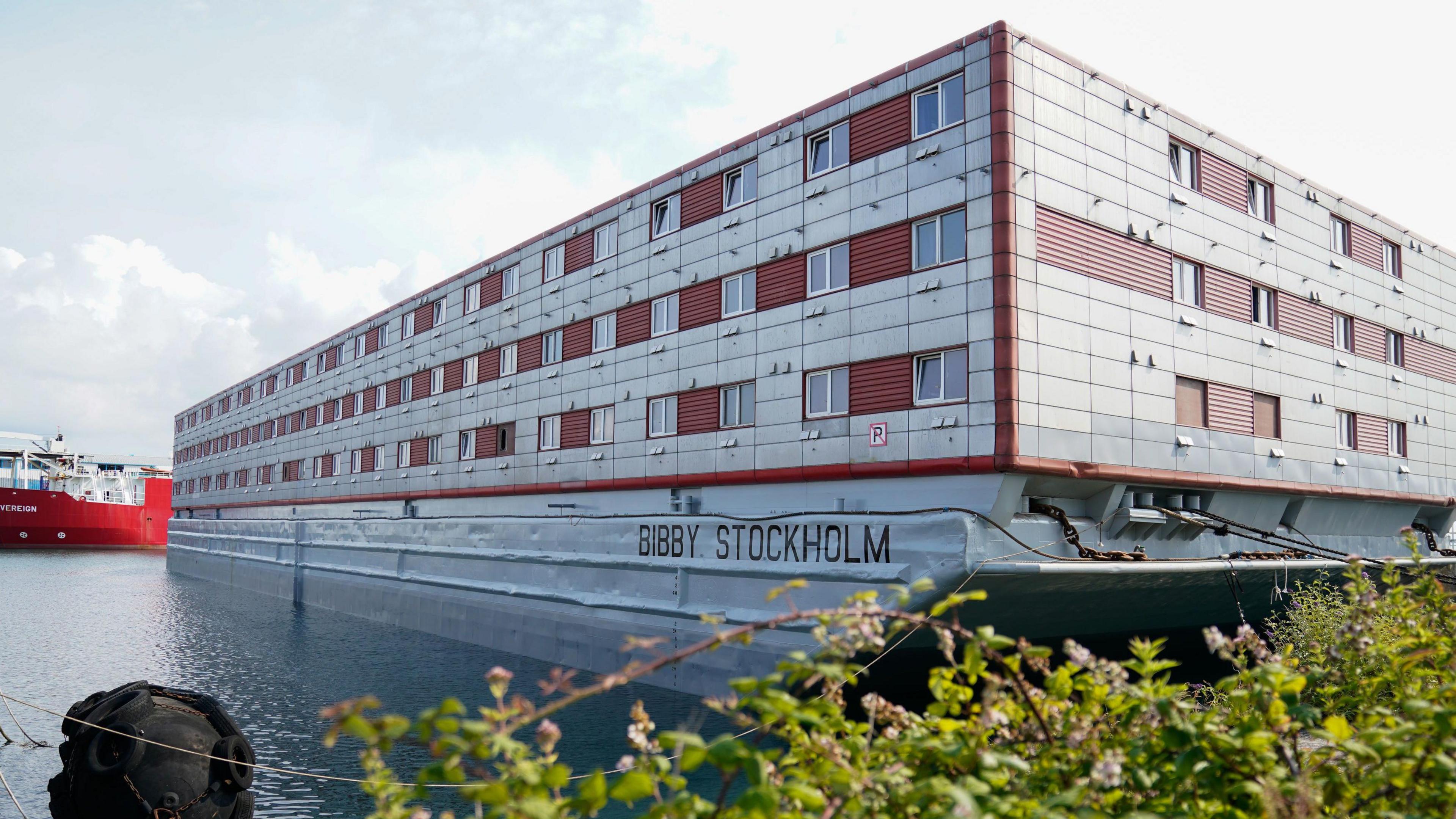
image by BBC
Third: the Bibby Stockholm barge became a political theatre that revealed how ad-hoc solutions collapse. I’ve worked on accommodation barges in the North Sea. Done properly — with oversight, dignity, time limits — they work. The problem? Temporary measures become permanent, oversight vanishes, and suddenly you’re managing a permanent slum while pretending it’s temporary.
Any controlled reception must be safe, dignified, time-limited, and designed for rapid processing. Not permanent residence. Not a PR stunt. A place where decisions get made and people move on.
Offshore Processing Only If You Mean It
Fourth: the Rwanda plan became political theatre because it had no teeth. If you’re going to process cases offshore, do it lawfully. Transparently. With credible return mechanisms. Not as a press release that courts will shred. Half-measures don’t work. They just breed delays and limbo — which, bizarrely, is what the original system already did.
Make Removals Real
Fifth: if someone’s been refused asylum after a fair hearing, there has to be an actual removals chain. You can legislate until you’re blue in the face, but without diplomatic agreements and operational will, a refusal is just noise. Which is why we’ve got tens of thousands of people in permanent legal limbo, appealing decisions, waiting for Godot while services buckle.
But Here’s What Terrifies Me: Where This Ends If We Do Nothing
If we keep pretending the leak isn’t there — if we keep threading the needle between political theatre and actual governance — here’s the trajectory I’ve watched in other places, and it doesn’t end well.
Year One to Three: The system gets slower. Decisions take longer. Appeals multiply because people realise delay is a strategy. Housing costs spiral because councils are managing permanent hostels, not temporary intake. Schools can’t keep up. GPs’ surgeries are overwhelmed. Services that were already stretched snap.
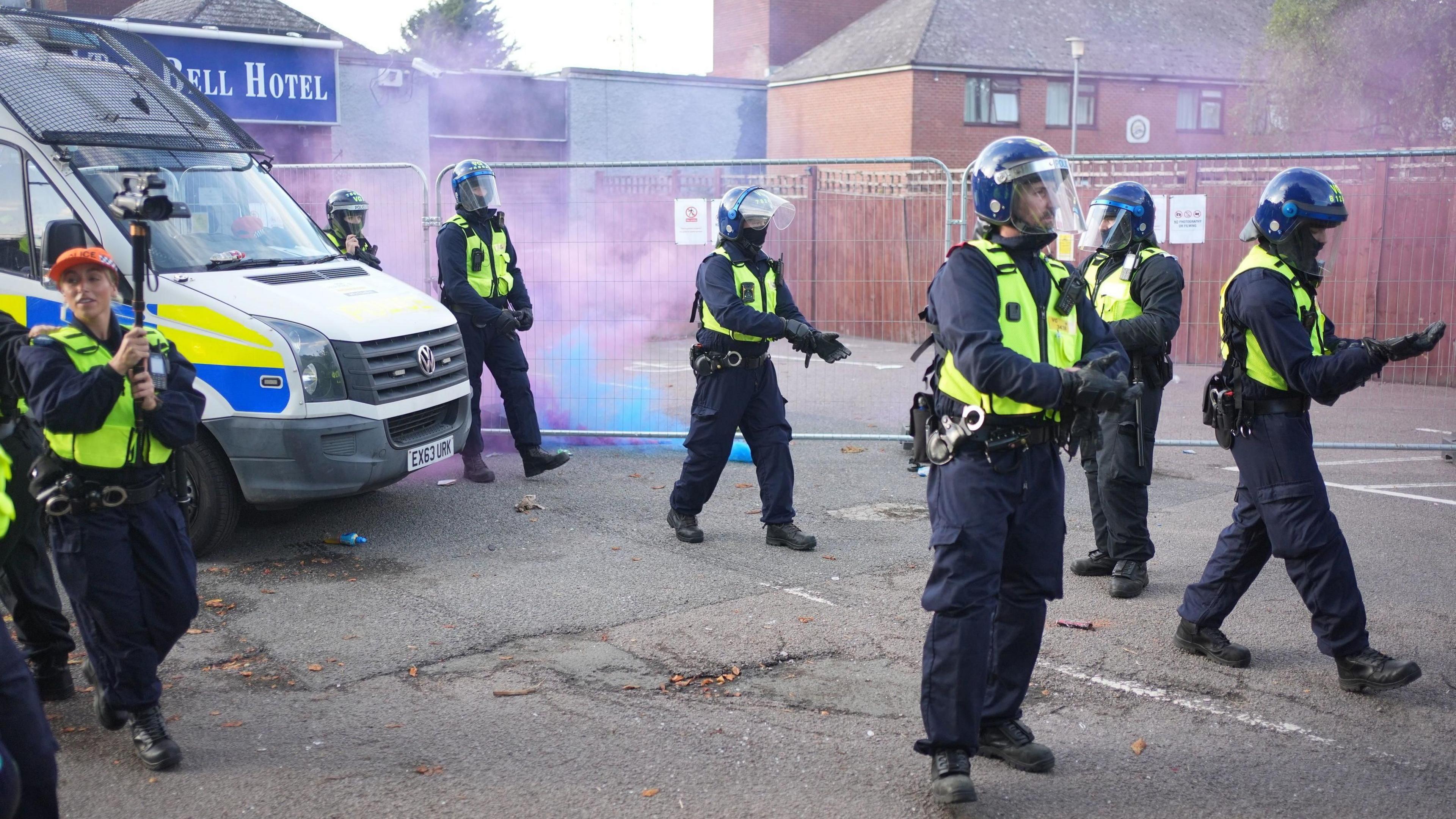
image by PA Media
Year Four to Seven: Public patience dies. Not in a dramatic way — in a quiet, bitter way. Polling shows majorities don’t trust institutions. You stop seeing headline anger and start seeing something colder: resignation. The idea that “the system doesn’t work” becomes so embedded that people stop expecting it to. That’s when things get dangerous, because cynicism becomes recruitment.
Year Eight to Twelve: Fringe politics stops being fringe. Parties that were polling at 8% suddenly hit 20% because they’re the only ones saying what people already believe: the system is broken and nobody in power cares. The difference between a legitimate grievance and a dangerous one is whether mainstream institutions address it honestly. When they don’t, people go looking for someone who will — and they rarely choose the moderate option.
We’ve seen this film before. In the 1930s, institutions that couldn’t solve real problems got replaced by ones that promised simple answers. I’m not saying we’re there yet. But I’m saying the trajectory is set if we keep doing what we’re doing.
The Leak Gets Bigger
Because here’s the thing about ignoring a small leak: it doesn’t stay small. It gets bigger. The pressure increases. And eventually, you reach a point where the only options left are the ones you should never have had to consider.
France is watching. Germany’s already living it. America’s in open crisis about it. Every Western nation with a welfare system and a border is staring at the same leak, and most of them are doing what we’re doing: theatrical half-measures that make headlines and solve nothing.
The question isn’t whether this gets fixed. It’s whether it gets fixed while we still have functioning institutions and public trust, or whether we wait until it’s so broken that we hand the job to people who’ll fix it with methods nobody actually wants.
Right now, we’re still in the window where honest, competent governance works.
Where you can say hard things and people listen because they believe you’re trying to solve the problem, not play politics with it.
That window doesn’t stay open forever.