The Night My Phone Taught Me I Didn’t Have a Sleep Problem
At 3:11 a.m., the kettle clicked on.
Not because I needed tea. Because I was up again—wide awake, scrolling under the duvet like a raccoon with Wi-Fi. Somewhere between a calendar ping, a “just in case” news alert, and a dopamine hit from a stranger’s comment, I’d convinced myself I had a sleep problem.
I didn’t. I had a notifications problem.
That’s the quiet shift no one tells you: exhaustion often masquerades as insomnia when it’s really interruption. We talk about mattresses and magnesium. Meanwhile, the glowing rectangle keeps whispering, “Only takes a second…”
Here’s the punchline I learned the hard way: three tiny decisions can turn 3 a.m. back into 3 a.m.
And I’ll show you precisely which ones—after we take a closer look at the trap.
The trap (and the gap)
Modern life runs on apps: airlines, banks, concert tickets, even the village parking. Useful, yes. But every helpful app sneaks in its own reason to shout at you. By bedtime you’ve granted twenty different companies the right to poke your brain.
That’s the knowledge gap: we assume we need more willpower or better sleep tips, when what we really need is less incoming. Fewer open loops at midnight. Less “just checking”.
If you’re over 60, there’s an extra twist: you’ve accumulated responsibilities (family, projects, maybe a side-gig), but your tolerance for faff has collapsed. Quite right, too. You want calm momentum, not digital whack-a-mole.
(If this resonates, I share a weekly togt note with practical tech-and-mind upgrades for our crowd—plain English, zero fluff. Have a look here and see if it’s your cup of tea: https://substack.com/@theoldgreythinker.)
The three switches that changed my nights
No biohacking. No monkhood. Just boundaries your phone will keep for you.
1) The Dusk-to-Dawn Quiet Window
Set your handset so nothing pings between, say, 9:30 p.m. and 7:30 a.m.—except a tiny list of true VIPs (spouse/partner, the kids, the neighbour with the spare key). That’s it. Everyone else can wait till morning.
Why it works: Your brain trusts the system. You’re not relying on willpower; you’ve given yourself permission to switch off.
How to do it (2 minutes): Create a “Do Not Disturb”/“Focus” schedule for every night. Allow calls from Favourites only. Silence notifications “Always”. Tick “Allow time-sensitive” off. You can still check things if you want—you simply won’t be shoved.
2) The One-Tap Evening Layout
Make your home screen boring at night. Replace the news/social/email icons with a tidy “Evening” page: clock, notes, reading app, gentle music, maybe a meditation tile. Everything else? Hidden one swipe away.
Why it works: Micro-friction. If doomscrolling takes three moves, you won’t bother. You’ll read two pages, feel your eyes soften, and drift.
How to do it (5 minutes): Add a second home screen; put only sleep-friendly apps on it. Link your Focus mode to show this page only. Set it to turn on with your Quiet Window.
3) The Out-of-Bedroom Charge
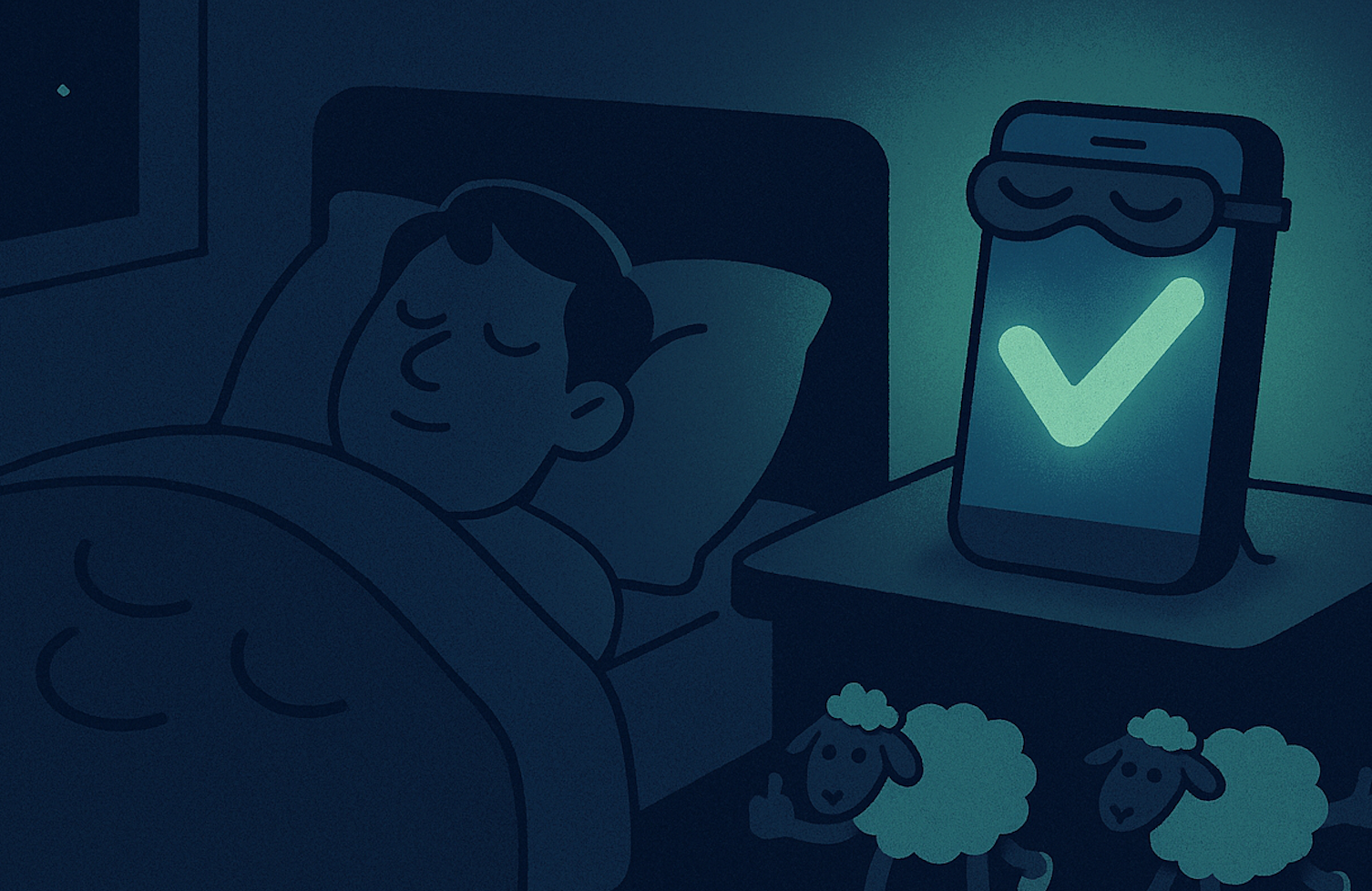
Yes, the old chestnut. Move the charger to the hall or kitchen. Use a cheap alarm clock by the bed. Your phone sleeps outside; you sleep inside.
Why it works: Out of sight, out of reach. You remove the midnight slot machine. Also stops you checking messages before your brain has even loaded in the morning.
How to do it (1 minute): Plug the charger elsewhere. Done. (If you must keep it nearby for emergencies, park it face down on a shelf, Focus mode on, vibrate off.)
What happened next (and what didn’t)
I didn’t become a different person. I still like a late-night rabbit hole. But the 3 a.m. kettle incidents stopped. My evenings got quieter. My mornings got sharper. That matters more than eight mythical hours—because it restores a feeling we don’t talk about enough: agency.
Sleep isn’t just unconsciousness. It’s the confidence that the world can wait while you recover.
And recovery makes focus possible.
If you want the “one week to calmer nights” version
Day 1 — Decide your Quiet Window. Write it on a sticky note. Tell your VIPs. Day 2 — Set Focus + VIP list. Test it by messaging yourself from another device. Day 3 — Build the Evening page. Put reading/mindfulness front and centre. Day 4 — Move the charger. Buy the £10 alarm clock. Celebrate with biscuits. Day 5 — Tidy the bedroom inputs. No laptop on the duvet, ever. Day 6 — Add a tiny wind-down ritual. Two minutes of box breathing; or three sentences in a notebook: What went well? What’s on my mind? What’s tomorrow’s first tiny step? Day 7 — Review. Did you wake up calmer? Keep what worked; ditch what didn’t.
None of this is medical advice. It’s logistics for your nervous system.
“But what if I miss something important?”
Two thoughts:
-
VIPs still cut through. That’s the point of the whitelist.
-
Most pings aren’t for you. They’re for the sender. The world survives till breakfast. Historically it always has.
If you want insurance, add one morning scan habit: after tea, check the “missed” tray once, triage in two minutes (reply, schedule, or bin), then crack on.
The bigger picture: focus is a habitat, not a trait
We beat ourselves up for “lack of discipline” when the real issue is habitat design. You don’t need a stronger mind; you need gentler defaults.
A calm phone creates a calm room creates a calm mind creates a decent night’s sleep—which creates the focus to write that mini-book, plan that trip, or finally learn the thing you keep saving videos about.
Start with the three switches. Let technology be your butler, not your boss. And please, leave the kettle to handle mornings.
One next step (do it now)
Open your phone, set a Quiet Window for tonight, whitelist two people, and move the charger. It’s ten minutes. Then climb into bed like the grown-up who runs the place.
If this was useful, there’s more like it on my Substack, The Old Grey Thinker — join here: https://substack.com/@theoldgreythinker