A Cold War Mystery, a Missing Inquest, and the Night Northeast England Tried to Forget
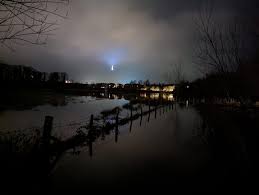
I’m sending this a bit early—an extra note before the day properly begins. If it lands in an already-crowded inbox, forgive me. But this has been sitting on my chest on and off for year, and maybe it’s something worth turning over with your first cup of tea. I lived through every part of this, and it still follows me around, quietly, insistently, even now.
It is free access as I think everyone should have a chance to read and discuss.
Some mysteries don’t enter your life with permission. They slip in sideways, through someone else’s memory, and then decades later they rise back up, demanding your attention.
This one began on the evening of 30 August 1981.
It should have been just another late-summer night on the northeast coast — warm air, long shadows, nothing unusual.
At that point in my life, I’d already done a full stint in the merchant navy, where you learn quickly that records keep you alive and precision isn’t optional. I’d briefly stepped away from the sea and was working as a firefighter at a small station outside Hartlepool.
That’s where the Seal Sands story found me.
Later, when I joined the police, became a detective, then trained as a PNC computer operator, and eventually returned to the seas as a captain, the story only deepened instead of fading.
I’ve spent a lifetime in professions where truth leaves a paper trail.
But the young man we found — or rather, the young man the system decided not to find — left none.
No file.
No inquest.
No record.
No trace.
And that’s the part that still keeps its grip on me.
30 August 1981 — The Night That Should Never Have Been Forgotten
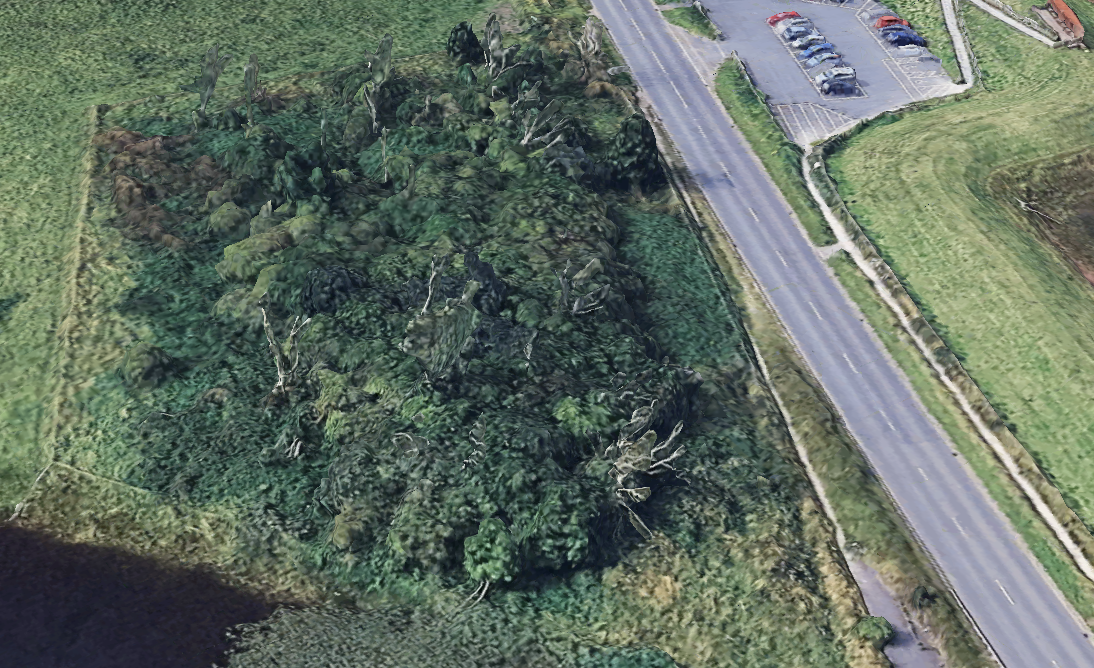
The call came into the fire station as a possible suicide at Seal Sands — a strip of industrial woodland on the north bank of the Tees.
When the crew arrived, they expected the grim, familiar rehearsals of a tragic but straightforward scene.
Instead they found nothing.
No body.
No signs of disturbance.
Just an uncanny stillness that experienced firefighters instinctively distrust.
They were about to call it in when something warm tapped a firefighter’s helmet.
Blood.
A torch beam shot upward.
And there he was.
A young man — suspended twenty feet up in the branches.
Hands wired tightly behind his back.
Wrists slashed.
Clothes neat.
Skin still warm.
And one detail that everyone remembered with identical clarity:
His teeth were perfect.
Dental-student perfect.
Unnaturally perfect.
There is no world in which a man binds his own hands behind his back, climbs twenty feet up a tree, slashes his wrists, and arranges his own body like a warning.
But the deeper horror wasn’t the body.
It was what happened after.
Because the world around him — the police, the coroner, the record-keeping systems — behaved as if he had never existed at all.
The Paper Trail That Should Have Been There — and the One I Never Found
By the time I joined the police and later became a detective, the Seal Sands story stuck to me. I started searching — first quietly, then obsessively.
I spent years rummaging through:
station logs
duty officer books
CID ledgers
mortuary registers
inquest calendars
incident reports from that entire week
Nothing.
Not one reference to a body found hanging in a tree on 30 August 1981.
When I trained as a PNC operator, with access to every national record a case like this should trigger — unidentified bodies, missing persons, coroner outcomes, pathologist files — I searched again.
Still nothing.
You can lose a single page.
You can misfile a report.
But you cannot lose an entire death across every system in policing unless someone intends it.
I wrote to the coroner.
They replied: no such case, no such inquest, no such death.
But I knew better.
The firefighters had seen him.
The branches had held him.
Darkness had hidden him.
Blood had fallen onto a helmet.
There had been a death.
And someone had gone to work to make sure it never became a case.
The Inquest Someone Claimed to Have Seen — But Wouldn’t Let Me See
Decades later, a group reached out, saying they were investigating the Seal Sands case. They wanted my account. I gave them everything — the wire, the height, the warmth of the body, the perfect teeth, the total absence of documentation.
When I finished, one of them said casually:
“We’ve seen the coroner’s inquest.”
The inquest the coroner himself said didn’t exist.
The inquest the PNC had no record of.
The inquest I had spent a career looking for.
I asked for a copy.
They refused.
Not hesitated — refused.
I filed a Freedom of Information request soon after.
The official reply?
No inquest ever took place.
But someone claimed they had seen it.
And that, more than anything, told me this wasn’t bureaucracy or incompetence.
This was removal.
Conscious removal.
The Newspaper Clipping That Shouldn’t Exist — But Does
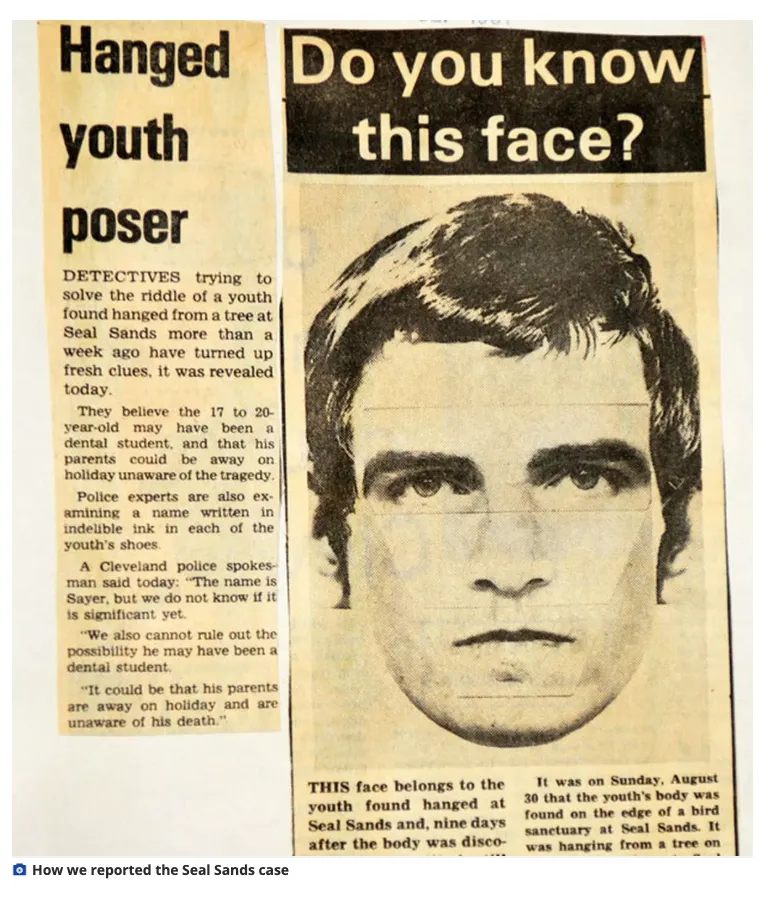
For years I combed through microfiche archives, local papers, anything I could find.
No story. No mention. Nothing.
Then, years later, an old clipping surfaced:
“Hanged youth poser”
“Do you know this face?”
A composite drawing of the victim.
A reference to a name inked inside his Adidas shoes.
A note about him possibly being a dental student — echoing the perfect teeth firefighters remembered.
This clipping should have been easy to find.
It wasn’t.
It survived like a fossil.
And yet it proves, at least for a moment, the truth tried to surface.
Even GazetteLive later referenced a missing-persons appeal connected to the case:
— another faint echo of something the system tried to smother.
Hartlepool John Doe (1981) — A Record Outside the Records
Then came the shock.
Years later, a digital entry appeared on the Unidentified Wiki:
Hartlepool John Doe (1981)
It described:
a white male
20–30 years old
found near the A178 between Graythorp and Seal Sands
on 30 August 1981
height around 5’6”–5’7”
wearing white Adidas shoes with “SAYER” written inside
a blue jersey
recognisable face
PMI of hours to one day
A fully formed entry.
A ghost of an investigation the official systems still deny.
It was like stumbling on a truth that had been accidentally left out in the open.
Reddit Picked Up the Thread — Because the System Didn’t
The case eventually appeared on r/UnresolvedMysteries, with users saying it was their “pet case,” the one British mystery they wished had an answer.
They noticed the same things I did:
no PNC record
no coroner record
no police record
only rumours, memory, and fragments
One user wrote that they hoped “someone, somewhere” would give him his name back.
That stuck with me.
Because somewhere, someone should have done that already.
What I Think Happened — And What I Know Happened
Seal Sands in 1981 was a Cold War blind spot — Eastern Bloc ships docking, quiet intelligence handovers behind warehouses, the kind of place where messages were sent in ways never meant for the press.
A young man with:
perfect teeth
neat clothes
bound hands
slashed wrists
and a death staged high in a tree
… that’s not suicide.
That’s theatre.
That’s warning.
That’s a message for someone who would understand it.
And then the cleanup.
The erasure.
The disappearance of everything except memory.
The Woods Still Know
Seal Sands hasn’t changed much.
Still bleak.
Still industrial.
Still carrying that heaviness that made the firefighters pause before stepping out of the engine.
Some truths are buried.
Some are lost.
But some — like this one — are buried only because someone was determined to bury them.
The body that hung on 30 August 1981 is still out there, in the silence.
In the fragments.
In the people who remember even when the record insists they shouldn’t.
Some mysteries rot.
This one refuses.
Because silence isn’t emptiness.
Silence is evidence.
This morning I paused in the middle of the pavement without meaning to. People flowed around me as if I were a stone in a river, but I stayed still. A younger version of me would have been embarrassed to stop like that — urgency used to feel like identity. Now, moments like this feel like invitations. Not to slow down, but to return to myself.
As I kept walking, I realized the pause wasn’t about stopping at all — it was about noticing the life I used to barrel past.
If a moment asks you to arrive today, let it.
Keep reading — this is where it gets real.
You’ve just read the thinking. Now comes the monthly Niche Box — the deeper dives, the stuff that doesn’t fit in a free essay.
Subscribe for $25/month (or $80/year — 71% cheaper!) to get:
• Monthly Niche Box (systems, plans, ideas, the real lessons)
• Full archive of essays
• Early access to new pieces
Or go deeper: Pay $150 once for lifetime access (Founder Member).