A Twisted History of Good Intentions
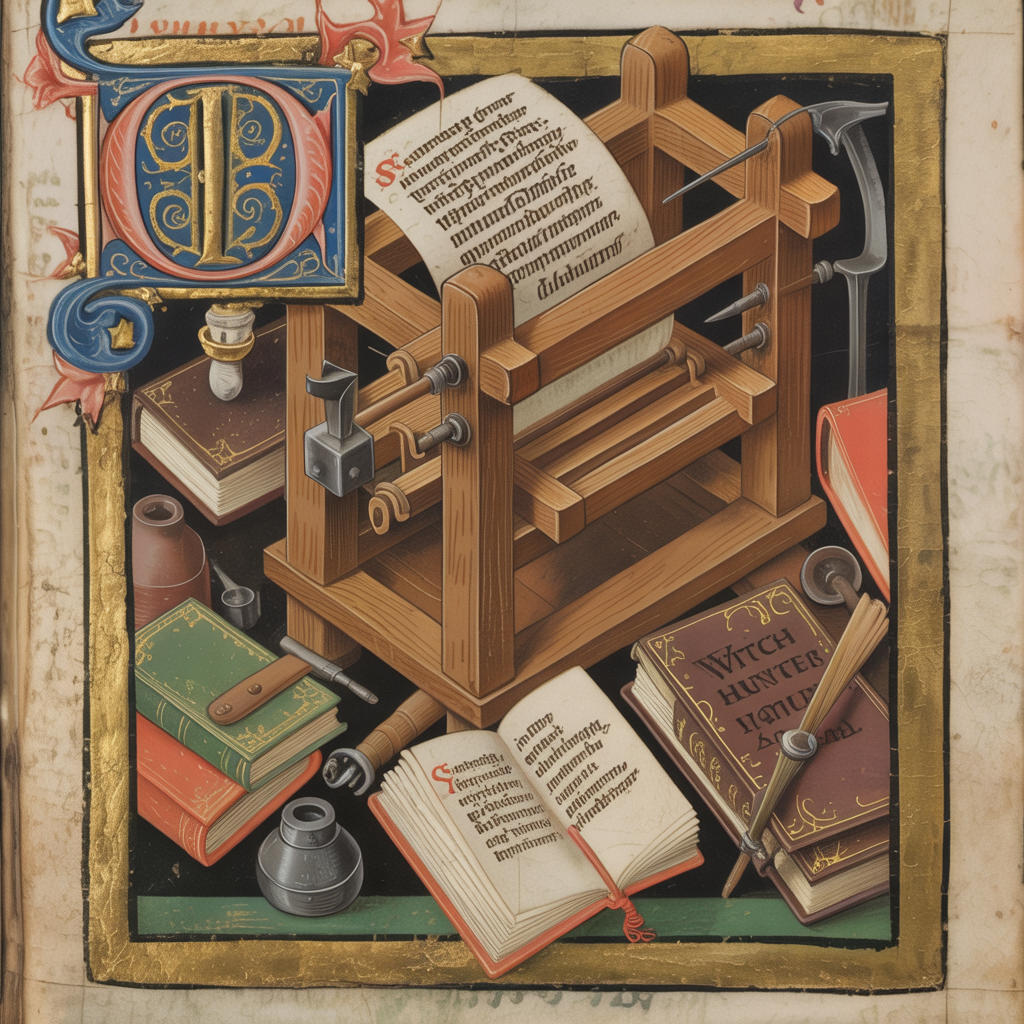
image by ideogram
I was wandering around the Gutenberg museum in Mainz yesterday and there’s a particular exhibit that really maked me think.
There’s Gutenberg’s magnificent Bible, humanity’s greatest hits in portable form, revolutionizing access to sacred texts.
And somewhere in the historical timeline nearby, there’s the Malleus Maleficarum – essentially a how-to guide for torturing and executing women accused of witchcraft.
Both made possible by the same miraculous invention. Same technology, same distribution network, wildly different outcomes for humanity.
It’s the kind of thing that makes you laugh uncomfortably in a museum and then question everything.
The Devil’s in the Distribution
Gutenberg thought he was doing God’s work. Literally.
His printing press would democratize the Bible, break the Church’s monopoly on scripture, bring the word of God to the masses.
And he was right! The printing press did all of that. It sparked the Reformation, boosted literacy, and fundamentally changed human civilization.
But here’s the thing about powerful tools: they don’t come with a moral compass pre-installed.
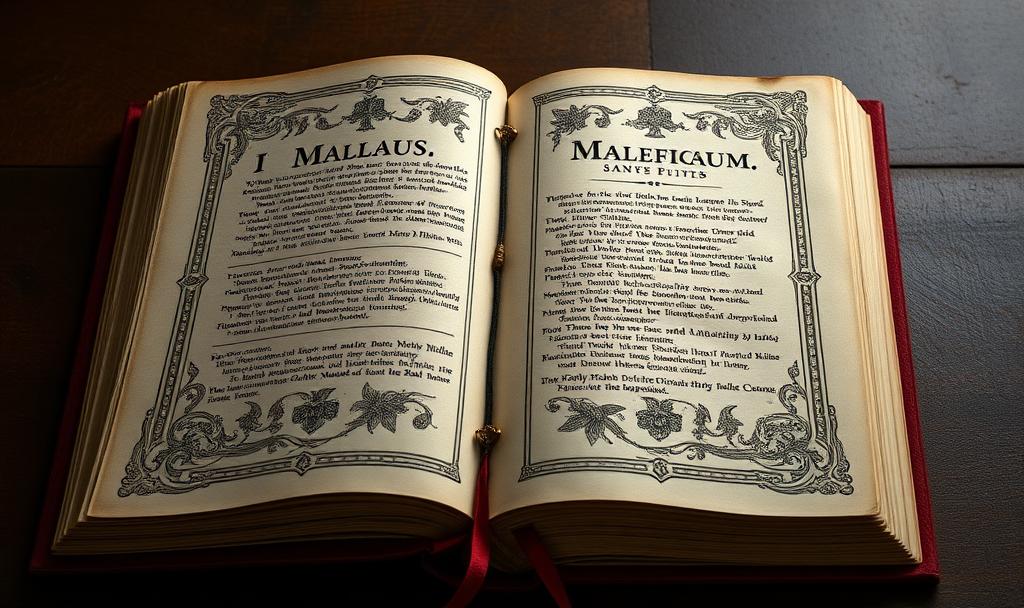
Within decades of Gutenberg’s Bible, the presses were churning out the Malleus Maleficarum (1487), written by Heinrich Kramer, a deeply unpleasant inquisitor who was essentially creating an instruction manual for the witch hunts.
Before the printing press, his paranoid ramblings might have stayed locked in a monastery somewhere. Instead, the book went through multiple editions and translations, becoming one of history’s most deadly bestsellers.
Tens of thousands died because someone had a very bad idea and excellent distribution.
The printing press didn’t care what you printed. It just printed.
The Cosmic Joke Department
History is full of these sick little ironies:
Nobel’s Dynamite –
Alfred Nobel invented dynamite to make mining safer and construction easier. It did those things! It also made warfare exponentially more deadly.
Nobel was so horrified by his legacy that he created the Nobel Peace Prize, essentially trying to buy his way out of being remembered as the man who industrialized death.
Talk about guilt-driven philanthropy.
The Internet –
Designed to survive nuclear war and share academic research, it’s given us access to the sum of human knowledge and cat videos.
It’s also given us unprecedented surveillance, cyberbullying, and the ability for your racist uncle to find a community of thousands of other racist uncles who reinforce his worst ideas.
Tim Berners-Lee wanted to connect scientists. He got 4chan.
Social Media –
“We wanted to connect the world!” they said.
And they did!
Unfortunately, it turns out that when you connect everyone, you also connect Holocaust deniers, flat-earthers, and people who think 5G causes everything from COVID to bad vibes. Surprise!
Humanity at scale is weird.
The Flip Side: Accidental Saints
But here’s where it gets interesting: the reverse is also true. Sometimes terrible things lead to surprising good.
The Black Death
– Killed a third of Europe, utterly horrifying. But it also destroyed feudalism, drove up wages for surviving workers, sparked medical advances, and helped end serfdom. Nothing says “workers’ rights” quite like a labor shortage caused by plague.
Wars
– Awful, obviously. But they’ve also accelerated medicine (triage, antibiotics, blood transfusions), technology (radar, computers, the internet), and even social progress (women’s suffrage gained momentum after WWI, civil rights after WWII). Horrible catalyst, undeniable results.
The Exxon Valdez Oil Spill
– Environmental catastrophe that killed hundreds of thousands of seabirds and marine animals.
It also led to the Oil Pollution Act of 1990, double-hull requirements for tankers, and arguably jump-started the modern environmental movement’s legislative victories.
Sometimes you need a villain with oil-soaked otters on the news to get regulations passed.
What Does This Mean for Us?
The uncomfortable truth is that we live in a morally ambiguous universe that doesn’t sort our inventions into “good” and “bad” bins.
Every tool is a double-edged sword, and the edge you get depends on who’s swinging it.
Gutenberg’s press didn’t make the choice to print witch-hunting manuals.
People did that. The printing press was just sitting there being awesome at printing, indifferent to content like a very talented but morally vacant employee.
This isn’t nihilism – it’s a call to attention.
We can’t just invent something brilliant and walk away assuming it’ll only be used for good.
We also can’t let fear of misuse stop us from innovating.
The printing press’s ledger, if we’re keeping score, is overwhelmingly positive despite the Malleus Maleficarum and centuries of propaganda.
But we had to actively work toward that positive outcome.
The Takeaway
Next time you’re feeling really good about some technological or social advancement, remember: someone’s probably already figuring out how to weaponize it.
And next time something terrible happens, there’s a non-zero chance it’s going to accidentally push humanity forward in some unexpected way.
We’re all just stumbling through this weird experiment called civilization, trying to print more Bibles than witch-hunting manuals, metaphorically speaking.
The tools don’t decide – we do.
And that’s both the most terrifying and most hopeful thing about being human.
So thanks, Gutenberg. You gave us everything, including the ability to mass-produce our worst ideas.
At least you also gave us the Bible, Shakespeare, and eventually, Terry Pratchett novels.

On balance, probably worth it.
Probably.
An after thought…
We cross paths with people for a reason! I’m very active on Medium here
and also have a full blown newsletter at The Old Grey Thinker
If you have time have a look – who knows what i will be publishing next – one thing it wont be is a digital Malleus Maleficarum!