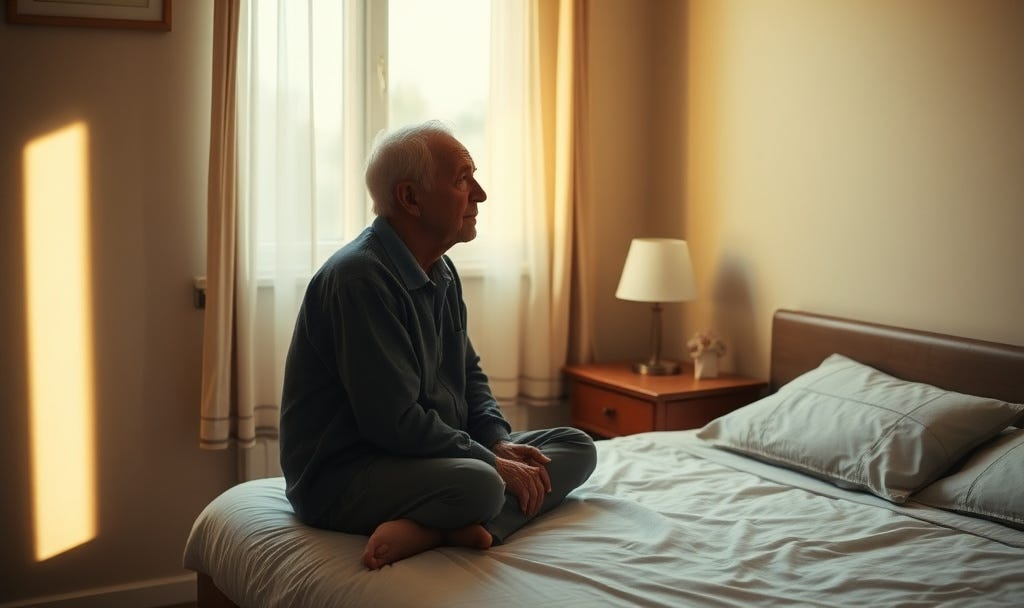
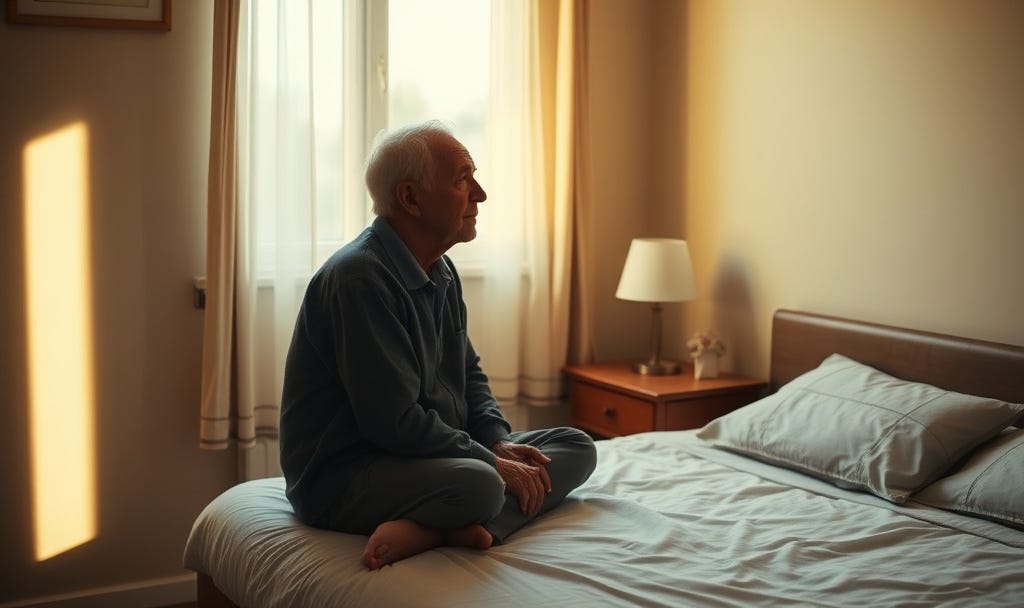
Most hangovers have an obvious culprit.
Too much wine.
Too little water.
One too many “Oh, go on then” top‑ups round the table.
You know the drill.
Headache, nausea, vow: Never again.
Then there’s another kind of hangover.
No alcohol.
No party.
Just a heavy, nagging feeling you wake up with more and more in your sixties and seventies:
“Is this really the life I meant to live?”
No pill touches it.
No fry‑up shifts it.
It’s the emotional hangover of a life that’s been, in too many places, half‑lived.
Not a disaster.
Not a write‑off.
Just smaller, safer, more compromised than some stubborn bit of you once hoped for.
The small ways we abandon ourselves
Nobody plans to half‑live.
You make reasonable decisions:
-
take the stable job, not the risky one
-
stay in the town where the kids’ schools are
-
shelve the big trip, the degree, the creative project for “later”
Some of those choices are wise.
Some are pure survival.
But over time, tiny acts of self‑abandonment add up.
-
The class you didn’t sign up for because you “couldn’t justify the money”
-
The boundary you didn’t set because you “didn’t want to upset anyone”
-
The relationship you didn’t leave because you were “too old to start again”
Each one chips a millimetre off your sense of being fully in your own life.
You barely notice at the time.
Decades later, the bill arrives as a feeling:
Tired.
Flat.
Slightly haunted by the sense you were meant for more than hair appointments and utility bills.
The myth of the big turning point
Stories about “second acts” love a dramatic pivot.
-
The person who quits their job and sails round the world.
-
The couple who sell everything and move to a cottage in the hills.
-
The late‑bloomer who writes a bestseller after retirement.
Lovely.
Also, for most of us, not remotely realistic.
We have:
-
partners
-
pets
-
pills to organise
-
relatives who need us
We can’t – and often don’t want to – burn our lives down.
So we conclude, mistakenly:
“If I can’t transform everything, I’m stuck with this half‑life.”
That belief is the hangover talking.
Foggy, dramatic, unhelpful.
The truth is quieter and more awkward:
A half‑lived life is usually repaired not by one big move… but by a series of small, stubborn ones.
Naming the missing pieces
To sober up from this particular hangover, you first have to name what, exactly, feels missing.
Not in grand terms.
In specific, slightly embarrassing ones.
Grab a bit of paper.
Answer, without overthinking:
-
What did I quietly hope my life would include… that never really happened?
Travel?
A different kind of work?
More art, music, learning, love, silliness?
-
Where did I sell myself short to keep the peace?
Saying yes when you meant no.
Laughing things off that hurt.
Staying smaller so someone else could stay comfortable.
-
When do I feel most like myself, even now?
With certain people?
Doing certain things?
In certain places?
That last answer matters.
Because the point now isn’t to chase a fantasy life you can no longer (or never could) have.
It’s to build more days around the conditions where you feel fully here, not half‑absent.
Guilt: the bouncer on the door
The moment you start considering changes – even tiny ones – guilt shows up.
-
“I should be grateful for what I have.”
-
“Other people would kill for my problems.”
-
“It’s selfish to think about myself at this age.”
Guilt is loud, but not always wise.
It rarely asks:
-
“What will it cost the people around me if I stay resentful and half‑alive?”
-
“What did my parents and grandparents never get to do – and do I really want to repeat that pattern?”
Half‑lived lives don’t just affect us.
They leak.
Into how patient we are.
Into the advice we give younger people.
Into whether we encourage them to take chances, or quietly clip their wings so they won’t fly further than we did.
One of the most generous things you may do for your family now is to become a bit braver in your own life.
Not reckless.
Braver.
Micro‑acts of courage
If this all feels too big, shrink it.
Ask:
“What would living 5% more fully look like this month?”
A few ideas:
-
Booking one thing purely because you want to do it, not because someone else does.
-
Saying, “No, I can’t help that day,” once – and noticing the roof stays on.
-
Starting the class, group or project you’ve “almost” started ten times before.
The aim isn’t to become a different person overnight.
It’s to give the current one a bit more oxygen.
Each time you act from the part of you that wants more – more truth, more depth, more joy – you shrink the hangover slightly.
You replace the heavy after‑taste of regret with the lighter ache of effort.
Making peace with the unchosen life
There will, inevitably, be things you can’t change now.
Paths you can’t go back and take.
People you can’t un‑hurt or re‑find.
Part of sobering up is accepting that some doors are closed.
Not in a bitter way.
In a clear‑eyed way.
Then, from there, asking:
“Given the life I actually have, what would wholehearted look like?”
Wholehearted doesn’t mean constant joy.
It means:
-
showing up properly to the small rituals you do have
-
letting relationships deepen instead of staying politely shallow
-
allowing yourself pleasure without immediately justifying it with chores
It might be as modest as:
-
lighting a candle and really tasting your evening tea instead of drinking it over the sink
-
phoning one friend for an unhurried chat
-
writing a page of the story you’ve been carrying in your head for thirty years
These things won’t fix every regret.
They will, however, stop today joining the long queue of days you barely inhabited.
The morning after
The emotional hangover of a half‑lived life doesn’t vanish in one go.
Some mornings you’ll still wake up with that familiar weight in your chest.
On those days, instead of spiralling through every past compromise, try this:
-
Put your feet on the floor.
-
Sit on the edge of the bed.
-
Ask one small question: “What would make today feel even slightly more mine?”
Then, if you can, do that thing.
Not “fix your whole life”.
Not “become your best self”.
Just tilt the day a degree towards the version of you who is still, despite everything, trying.
You cannot go back and live your life from the start with the knowledge you have now.
But you can, from this point onwards, refuse to keep abandoning yourself in the same old ways.
That refusal is quiet.
Nobody will clap.
But it’s the difference between dragging the past around like a hangover…
…and slowly, stubbornly, turning the time you have left into something that feels, if not perfect, at least properly yours.
Before you continue, a gentle note: paid subscribers get access to all of my private guides, behind-the-scenes AI methods, and step-by-step ways to turn your knowledge into income in a calm, grounded, sustainable way.
If subscribing isn’t right for you at the moment, you can always support my work by buying me a pot of tea.
I appreciate every kindness — truly.
⬇️ Keep reading for the deeper story — and the shift that changed everything.small kindness hit you harder than it should — this is the part you shouldn’t miss.